
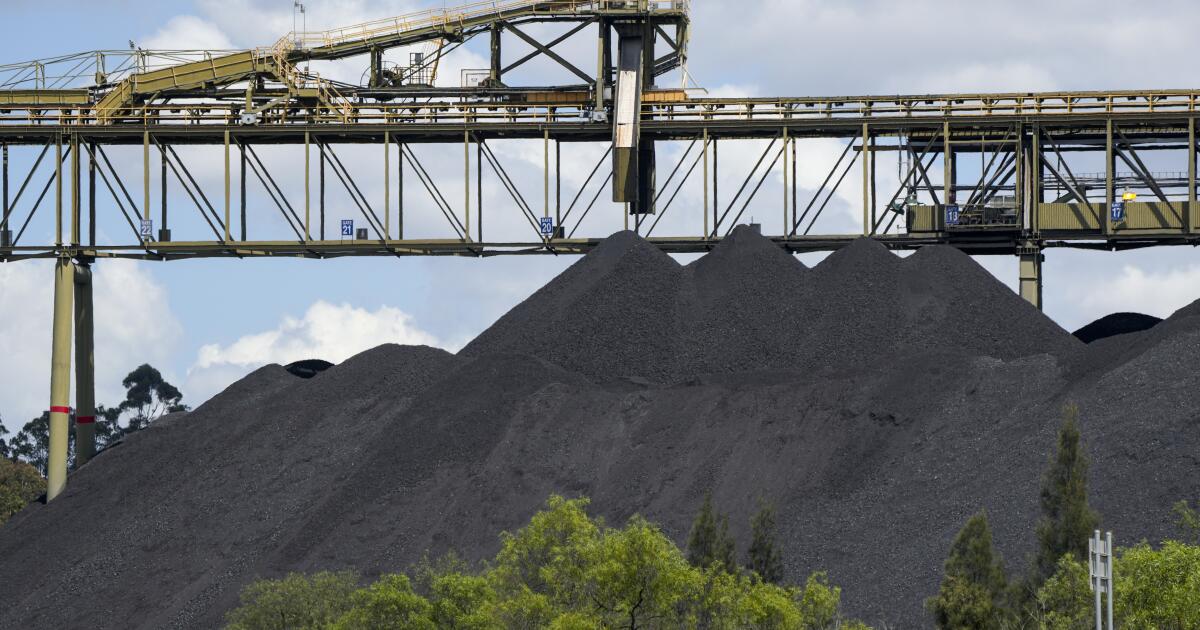
New South Wales (NSW), Australia’s second-largest coal-producing state, has announced a significant shift in its coal mining policy. The government will ban new coal mine applications while also introducing strict rules to curb methane emissions from existing mines.
This move aims to help the state reach its net zero emissions goal. However, it will not impact current coal mines or their expansions. As noted by officials, the government will continue to support coal production where it currently exists. This is crucial because coal remains NSW’s top export, generating approximately $23.4 billion annually. The majority of this coal goes to power stations in countries like Japan, China, and Taiwan.
Australian Minister for Planning and Public Spaces, Paul Scully, expressed concern that as the demand for thermal coal decreases, the state must think about future jobs and energy solutions for coal-dependent areas. With around 26,000 people employed in the coal industry, the government plans to create a Future Jobs and Investment Authority. This will help workers transition to new careers as the industry evolves.
Some of the largest coal miners in the state include Glencore Plc, Yancoal Australia Ltd., and Whitehaven Coal Ltd. BHP Group, the world’s biggest miner, also has operations, although they are smaller compared to Queensland, Australia’s largest producer of coal.
In addition to the new mine ban, the NSW Environment Protection Authority has introduced stringent rules on methane emissions. It requires large mines to either capture and treat methane gas or flare it to prevent it from escaping into the atmosphere. Notably, the coal mining industry is responsible for about 30% of the state’s methane emissions, making it a key player in the state’s greenhouse gas output. Methane is a potent greenhouse gas, significantly more harmful than carbon dioxide in the short term, making these regulations critical for climate efforts.
According to a report by the International Energy Agency, global coal demand is expected to peak within the next few years. This presents both challenges and opportunities for regions like NSW, which need to adapt to a changing energy landscape.
In summary, NSW’s recent policy changes reflect a growing recognition of the need for sustainable energy practices while balancing current economic dependencies. As the world moves towards cleaner energy solutions, regions reliant on coal must prepare for a future where these resources may no longer dominate.
Source link
