
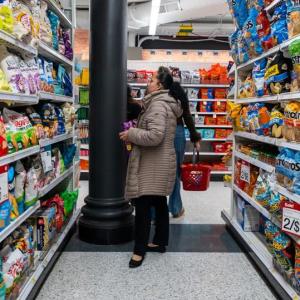
The recent conflict in Iran has significantly impacted global food prices, pushing them up by 2.4% in March alone. This trend marks the second consecutive month of rising prices. The United Nations attributes this increase mainly to soaring energy and fertilizer costs, driven by the ongoing war.
For instance, key commodities like sugar and vegetable oil saw notable price rises of 7% and 5%, respectively. Wheat prices spiked by 4.3%. Dairy and meat prices also rose, indicating a broader trend of increasing food costs.
One major factor is the disruption of oil supplies through the Strait of Hormuz, a crucial passage for a third of the world’s oil. This has further strained the agricultural sector, where farmers and transport companies are facing rising operational costs due to higher diesel prices. Currently, the average price of diesel in the U.S. has reached $5.53 per gallon, affecting the logistics of food distribution. Diesel is not just essential for trucking but also fuels farm equipment, making it critical for food production.
In the UK, experts foresee food prices to increase by at least 9% by year-end. This projection is a significant jump from initial estimates of 3.2% prior to the conflict.
One-third of global fertilizer production also transits through the Strait of Hormuz, creating added pressure on agricultural outputs. The UN warns that if the conflict persists, fertilizer prices could surge by 15% to 20% in the coming months. Experts are concerned that consequences from these price hikes may worsen food insecurity, especially in vulnerable communities.
According to a report from the Center for Global Development, low-income households spend about 65% of their income on food. In contrast, wealthier households allocate only about 20%. This disparity means that rising food prices affect poorer households disproportionately, three times harder than the affluent.
Lee Crawfurd and Eeshani Kandpal, economists at the Center for Global Development, noted, “When fertilizer prices rise, the subsequent harvest becomes smaller and more costly.” They emphasize that the impacts of these price increases may take 6 to 12 months to fully materialize.
The landscape for food prices is changing rapidly, and experts urge action now to mitigate potential fallout. As this situation unfolds, it remains vital to monitor developments closely and understand their implications for food security globally.
For more details on the current food price trends and their implications, check out the UN’s recent reports here.
Source link
fertilizer prices, food prices, wheat prices, global prices, Dairy prices
