
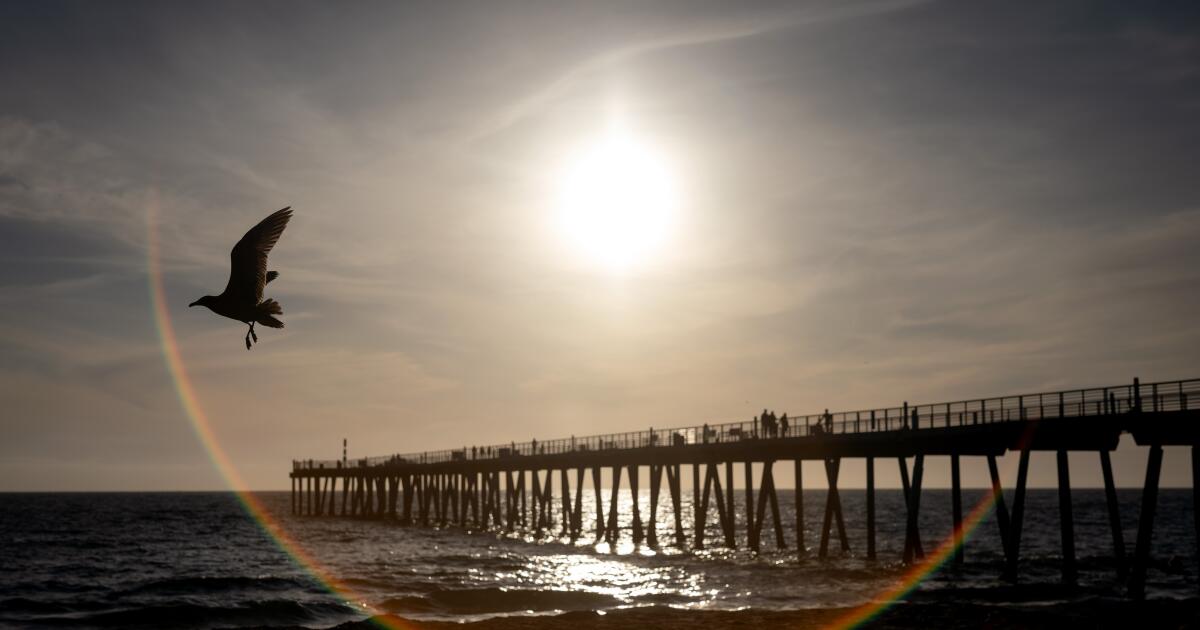
An intense marine heat wave is heating up the Pacific Ocean off California’s coast. Experts warn it may disrupt coastal weather and ecosystems for months.
This heat wave began forming late last year but increased in severity recently. At the Scripps Pier in La Jolla, water temperatures hit a record 68.5°F—nearly 8 degrees above average. The bottom temperature was also record-high for this time of year at 67.6°F.
The heat wave is significant, stretching from San Francisco down to the Mexican border. Climate scientist Daniel Swain notes this could have lasting effects on Southern California’s weather and marine life.
Several factors are at play. A persistent ridge of high pressure and weaker coastal winds prevent cooler deep ocean water from rising—this process, known as upwelling, normally brings cold water to the surface.
Human-driven climate change is exacerbating temperature rises. Swain points out that it takes much more energy to warm ocean water compared to air. “We’re entering a significant period for this region’s ocean temperatures,” he says.
Forecasts indicate a 61% chance of an El Niño developing in the coming months. This climate pattern typically brings warmer, wetter conditions to Southern California and is expected to amplify the existing heat wave. Dillon Amaya, a NOAA scientist, suggests the marine heat wave could continue off Baja California into December, potentially intensifying due to El Niño.
This situation mirrors the effects of “the blob,” a major marine heat wave that disrupted ecosystems from 2014 to 2016. It caused mass die-offs of seabirds, fishery issues, and harmful algal blooms. Current data indicates that this heat wave is not just a fluke but may be part of a troubling trend linked to climate change.
The warm ocean could also lead to less coastal fog, a factor known as “May gray” and “June gloom,” which many Californians rely on for cooler weather. As warmer air can hold more moisture, conditions could feel more humid, leading to health concerns, especially for those unaccustomed to such humidity.
Experts are uncertain about wildfire season impacts. While increased moisture might help, warm conditions could also trigger dry lightning storms, heightening fire risks.
Historically, marine heat waves followed similar patterns, warning us about ongoing climate shifts due to greenhouse gases. As Art Miller from the Scripps Institution of Oceanography explains, even if this wave would have appeared regardless of climate change, the overall heat is undeniably linked to global warming. With temperatures rising globally, future heat waves may be even more intense.
For Southern Californians, this heat wave isn’t just a weather blip; it’s a glimpse into the climate challenges ahead. As ocean temperatures rise, so too do concerns for ecosystems, weather patterns, and public health.
Source link
