
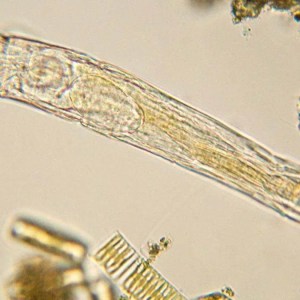
Scientists have made an exciting discovery by reviving a 24,000-year-old rotifer, a tiny, multicellular organism, from the Siberian permafrost. This breakthrough offers us a glimpse into how life can endure extreme conditions over thousands of years.
Published in the journal Current Biology, researchers found the rotifer buried in frozen soil called the Yedoma formation. This ice-rich environment helped preserve it since the Late Pleistocene, a time that ended roughly 11,700 years ago. It is remarkable that after carefully thawing the rotifer in a lab, it not only became active but also reproduced asexually. This shows that its cellular structures remained unharmed despite being frozen for millennia.
Lead researcher Stas Malavin noted that this study provides strong evidence that multicellular life can enter a state called cryptobiosis. In cryptobiosis, an organism’s metabolism slows nearly to a halt, allowing it to withstand harsh environments like extreme cold or drought.
While scientists have managed to revive simpler, single-celled organisms before, reviving a more complex multicellular one is a significant achievement. This raises many questions about cellular resilience and may help inform research in biotechnology and astrobiology.
In an interview with Indian Defence Review, Malavin emphasized that this discovery may reshape our understanding of how life can persist. It could inform studies on how cells endure damage from ice crystals and radiation. The implications of this research are vast, suggesting that life might exist in extreme environments, even beyond Earth.
There’s also concern regarding the release of ancient microbes as global temperatures rise and permafrost thaws. Such microbes could potentially pose health risks, as they’re usually dormant yet capable of infecting host cells once thawed.
It’s fascinating to think about how long some organisms can remain viable under the right conditions. The study pushes the boundaries of our knowledge on survival, challenging prior assumptions about life’s limits on our planet.
While the revival of larger organisms, like mammals, from ancient permafrost remains highly unlikely due to their complexity, this study undeniably expands our understanding of life’s potential resilience in extreme environments.
For more information on this fascinating topic, you can read the original article from Fox News.
Source link
microscopic organism, freshwater environments, Siberian permafrost, multicellular animal, Scientists, cellular structures, frozen state
