
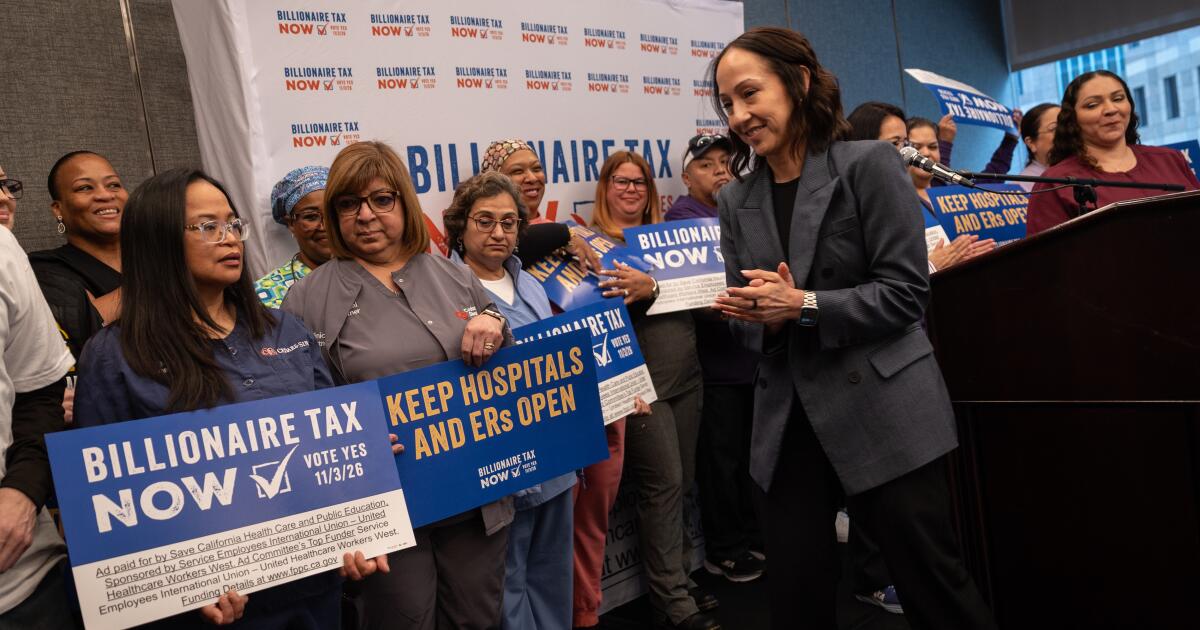
Supporters of California’s proposed billionaire tax announced they are submitting nearly 1.6 million signatures to get it on the November ballot. They argue the tax is necessary to offset cuts in federal healthcare funding that impact millions of vulnerable Californians.
“California’s health is at stake,” said Liz Perlman from AFSCME Local 3299. “Last year, 3.4 million Californians lost their healthcare, and premiums skyrocketed. Hospitals are closing, and this measure aims to right that wrong.”
To qualify for the ballot, they need around 875,000 valid signatures by June 24. Opponents fear the tax could harm California’s economy and worsen the budget deficit, which exceeds $35 billion. Rob Lapsley, from the California Business Roundtable, said, “This wealth tax could drive wealthy individuals out of the state, reducing tax revenue in the long run.”
In response, a rival initiative called the “Transparency Act” is also seeking support. Backers claim it will increase oversight of state spending and require voter approval for new special taxes. This could potentially nullify the billionaire tax if both measures make it to the ballot and the Transparency Act has more votes.
“Californians are frustrated,” said Paul Granillo, from the Inland Empire Economic Partnership. “We pay high taxes, yet mismanagement hurts communities. Voters deserve accountability.”
Tech billionaire Chris Larsen has contributed $10 million to oppose the billionaire tax, while significant funds for the Transparency Act have come from wealthy individuals, including Sergey Brin.
This wealth tax proposal divides opinions even within the Democratic Party. Figures like Senator Bernie Sanders support it, while Governor Gavin Newsom publicly opposes it. Among those running to succeed Newsom, various views on the tax have emerged.
The Service Employees International Union (SEIU), which advocates for healthcare workers, created this proposal to counteract health funding cuts made by the Trump administration last year. The tax would apply a one-time rate of up to 5% on individuals or trusts with assets over $1 billion, excluding certain properties. It’s estimated to potentially raise $100 billion, with most funding healthcare, food aid, and education initiatives.
Supporters argue that the wealthiest Californians will not leave the state. “Most Californians see the necessity of this tax to keep hospitals open,” said Mayra Castaneda from SEIU-UHW. “This is a David versus Goliath battle, and we’re winning.”
In a time of fiscal issues and rising living costs, this initiative highlights the ongoing struggle between wealth, accountability, and the social safety net. As debates unfold, public sentiment remains a crucial factor to watch in this evolving landscape.
For further insight into the implications of such taxes, you can explore data from the California Budget and Policy Center.
Source link
