
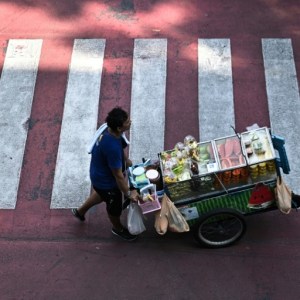
Bangkok’s street food is a vibrant mix of flavors and aromas. Garlic, chili, and grilled meats fill the air as vendors serve up delicious dishes. For locals and tourists, these bustling stalls create a unique atmosphere that is a hallmark of the city.
However, there’s a cloud hanging over this food culture. Recently, the Bangkok government has been tightening rules on street vendors. They aim to clear footpaths and relocate sellers to specific areas. This shift leaves many vendors worried about their livelihoods.
Take Looknam Sinwirakit, for example. She sells fried glutinous rice cakes in Chinatown. “I’m stressed because we’re here illegally,” Looknam said after getting fined 1,000 baht (about $30). Despite concerns, she relies on the steady flow of customers that makes the risk worthwhile. “It’s not fair to just kick us out,” she adds.
Nearby, Wong Jaidee, a durian seller with over 20 years of experience, shares similar fears. He feels the pressure of Bangkok’s high cost of living and has no backup plan if forced to move.
Since 2022, the number of street vendors has dropped dramatically—over 60%, according to the Bangkok Metropolitan Administration (BMA). Many have transitioned to informal markets, while others have closed for good due to strict regulations. Kunanop Lertpraiwan from the BMA explains that vendors crowding main roads face the most scrutiny, while those in less busy areas retain some flexibility.
The city is now encouraging vendors to set up in designated hawker centers. The latest opened in April next to Lumphini Park, featuring various food stalls. While some vendors see these centers as a better deal—offering essentials like water and electricity—others are reluctant to leave their familiar spots.
Thitisakulthip Sang-uamsap, who has sold fried vegetable balls near Chinatown for over 40 years, worries about the change. “If they ask me to leave, I won’t be comfortable,” she says, hoping for understanding from the government, especially for older vendors struggling to make ends meet.
Street food isn’t just tasty; it’s part of what makes Bangkok special. Tourists rave about the flavors. One German visitor, Oliver Peter, expressed concern that losing these vendors would diminish the city’s charm. He loves Pad Thai and fears it would no longer taste the same without the street vendors cooking it up.
In essence, the evolving landscape of Bangkok’s street food is a reminder of how important these vendors are to the city’s identity. As regulations change, we must consider the implications not just for the food but for the culture it represents. For further insights on urban street food trends, you can check this source.
Source link
Bangkok, street food, street sellers, Bangkok, Thai capital, street vendor, dozen vendors, Looknam Sinwirakit
