
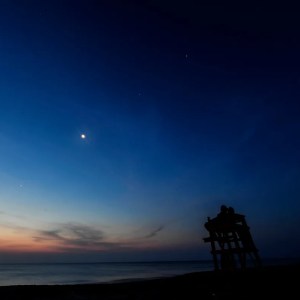
In April, NASA’s Artemis II astronauts returned from their moon mission with breathtaking photos of our lunar neighbor. Get ready, because the moon has a special visitor on May 18: Venus! This event, known as a conjunction, gives us a wonderful chance to see both the moon and Venus close together in the night sky.
A conjunction means two celestial bodies appear near each other from our perspective on Earth. Venus, the second brightest object in the sky after the sun, has recently been spotted with other planets, including Saturn. This upcoming alignment is just one of many times in recent months that Venus has danced in the sky with different celestial partners.
### What is a Conjunction?
In simple terms, a conjunction happens when planets or moons align in a way that makes them look close together from Earth. Although they are actually millions or even billions of miles apart, it creates a stunning visual for stargazers. According to the Planetary Society, this occurs when the orbital paths of these bodies bring them together on the same side of the sun.
### When Can You See It?
Mark May 18 on your calendar! On this night, look up at the moon, and you should see Venus shining brightly just below it. NASA’s skywatching guide emphasizes that this event will be easily visible in the U.S. and globally, making it a chance for anyone interested in astronomy to take a peek at this cosmic meet-up.
### Lunar Phase
On May 18, the moon will be about 5% full, displaying a thin crescent. This means that only a sliver of the moon will be visible, allowing for an interesting contrast with the brightness of Venus. The Old Farmer’s Almanac provides more details on lunar phases, helping skywatchers understand what they’ll see.
### Will Clouds Get in the Way?
Weather can be a factor in your viewing experience. The National Weather Service offers a cloud cover forecast for the night of the conjunction. Clear skies would be ideal, but if clouds roll in, your view might be hindered. Checking local forecasts can help you decide the best time to look up.
### Tips for Viewing
If you’re in the Northern Hemisphere, catching this conjunction should be relatively easy. Simply locate the crescent moon in the western sky; Venus will sparkle brightly beneath it. For those looking for the best viewing spots, consider visiting a designated dark sky area, as listed by DarkSky International, to minimize light pollution.
### No Telescope Needed
While telescopes can enhance the viewing experience, they’re not necessary. You can still spot the moon and Venus clearly with the naked eye, making this conjunction accessible to all.
### Final Thoughts
This conjunction is a perfect opportunity for anyone interested in the wonders of our universe. Keep an eye out on May 18 and enjoy the beauty of the night sky! If you’re curious about other cosmic events, tools and updates from organizations like NASA can keep you informed about future celestial happenings.
And remember, whether you’re a seasoned astronomer or simply someone who enjoys a lovely evening out, there’s always something magical about looking up and witnessing the celestial dance above us.
Source link
Venus, conjunction
