
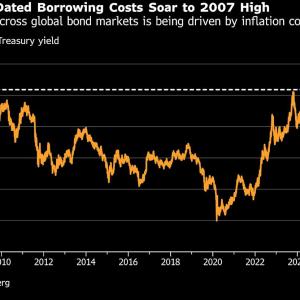
Yields on the US Treasury’s longest-dated bond, the 30-year bond, have jumped to levels not seen in nearly two decades. This increase has raised concerns among investors about rising inflation and the likelihood of higher interest rates.
Recently, the yield reached 5.20%, reminiscent of the days leading up to the 2007 financial crisis. This spike isn’t just isolated to the US; bond markets in Europe and Japan are also experiencing declines. Overall, rising yields globally suggest that fears about inflation, driven partly by increasing energy prices due to geopolitical tensions, are looming large.
Liz Templeton, a senior product manager at Morningstar, noted, “The bond market is adjusting to a future where rates stay higher for longer.” She attributed this to uncertainties around Federal Reserve policies and ongoing cost pressures from energy prices.
As yields climb, they pose risks to the US economy and can increase borrowing costs for homeowners and businesses. The market is already reacting, with investors adjusting their expectations regarding future rate hikes. Some analysts now anticipate rate increases sooner than previously thought, given rising borrowing costs linked to government financing.
Interestingly, the bond selloff wasn’t kicked off by a surge in oil prices or a specific event. Instead, it reflects deeper market anxieties as investors reassess how much they should pay for debt. For instance, US 10-year Treasury yields hit 4.69%, the highest since early 2025.
Trading is notably heavy, particularly in five- and ten-year notes. Day trading volumes have nearly doubled recently, indicating significant investment shifts. Investors seem to believe that with rising energy prices, inflation could become a long-term concern rather than just a transient issue.
Looking globally, yields on government bonds are climbing. For instance, UK bonds are nearing a 6% yield, and Germany’s long-term borrowing rate has also hit a high not seen since 2011.
Scott Bessent, the US Treasury Secretary, is under pressure to reduce borrowing costs amid rising debt levels. Estimates show a median budget deficit of nearly $1.95 trillion for the year, expected to increase further in the next few years. This financial backdrop is stirring significant concern among investors.
Laura Cooper from Nuveen mentioned, “Yields reflect not only inflation but also growing fiscal risks.” The pressure on bonds could lead investors to reconsider their portfolios, especially as the S&P 500 has performed well, gaining over 7% this year despite the downturn in bond markets.
Recent market reactions have been mixed. Smaller companies, often more burdened by debt, have seen stock declines, while larger indexes like the S&P 500 and Nasdaq have also dipped. Some analysts believe that if rates reach 5.25%, we could see a more substantial pullback in stock prices.
Edward Harrison, a macro strategist, stressed the importance of clarity around policies and inflation, stating, “Bonds are under pressure due to uncertainty over policy and inflation outcomes.”
In this uncertain environment, investors must stay informed and agile. Decisions made now could shape the financial landscape for years to come.
For more details on this topic, you can read further on Bloomberg.
Source link
government bonds, Bloomberg, Federal Reserve, US Treasury, Bond markets, investors, Barclays Plc
