
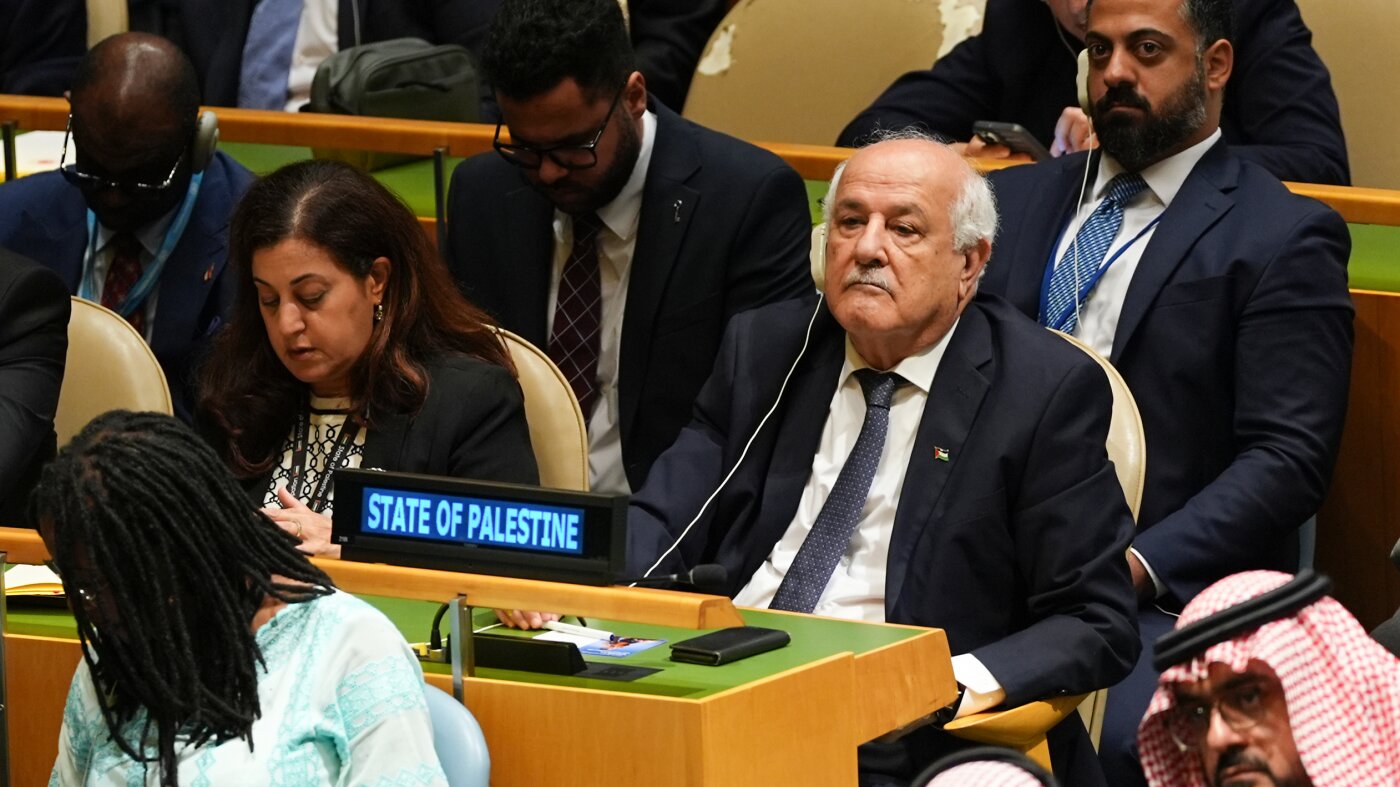
TEL AVIV — Pressure from the U.S. has led the Palestinian Ambassador to the United Nations, Riyad Mansour, to withdraw his bid for a vice presidency role at the U.N. General Assembly. Lebanon’s ambassador will take his place.
According to a source familiar with the situation, the Palestinian delegation chose to step back from their bid for two years, likely influenced by the political climate and the end of President Trump’s term. This decision was communicated through another Arab country, and the source requested anonymity as it had not been made public yet.
La Neice Collins, the spokesperson for the President of the U.N. General Assembly, confirmed the withdrawal. However, the U.S. State Department declined to comment.
A sensitive cable from the State Department, reviewed by NPR, indicated that U.S. officials had urged the Palestinian leadership to abandon the bid. The cable expressed concerns that Mansour’s history of condemning Israel could heighten tensions and undermine U.S. peace plans in the region. It noted that giving him a platform might hurt U.S. relations with the Palestinian Authority and that Congress would view the situation seriously.
Historically, the U.S. has resisted Palestinian efforts to attain full membership in the U.N., viewing such moves as detrimental to peace negotiations with Israel. Previous administrations have made moves to restrict Palestinian officials’ access to the U.N. Last year, the Trump administration controversially denied U.S. visas to high-ranking Palestinian officials. However, this time, they did not revoke visas for the entire Palestinian delegation.
This incident highlights the ongoing tensions around Palestine’s recognition on the global stage and the influence of U.S. policy in Middle Eastern affairs. Recent studies show that public opinion on U.S. foreign policy in this region is deeply divided, reflecting a complex relationship that has historical roots. For instance, a recent Pew Research survey indicated that opinions about U.S. involvement in the Israeli-Palestinian conflict vary widely based on political affiliation and age.
In conclusion, the interplay between U.S. political leverage and Palestinian aspirations continues to shape diplomatic relations in a deeply polarized context.
Source link
