
A fascinating new discovery in New Mexico is shedding light on a prehistoric reptile that resembles a dinosaur but is part of a completely different family tree. This creature, named Labrujasuchus expectatus, had a beak, tiny arms, and no teeth, making it unique among ancient reptiles.
Discovered in a well-known Triassic quarry, the fossil dates back about 212 million years. Researchers noted its differences from other reptiles in its group, the Shuvosauridae. These subtle features suggest it lived in a distinct ecological niche.
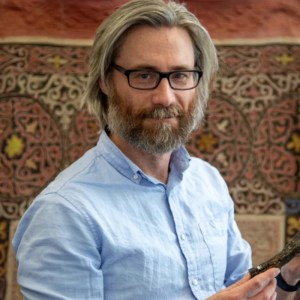
Alan Turner, a paleontologist at Stony Brook University, led the research and highlighted how the age and uniqueness of the fossil are significant. He pointed out that L. expectatus is not a direct ancestor of modern crocodiles; rather, it has a distant evolutionary link to them.
Interestingly, even without teeth, it’s likely that this reptile was carnivorous. Birds can have beaks yet still prey on other animals. This leads scientists to consider that L. expectatus may have had similar habits.
Discoveries like this help us understand the diversity of life before mammals emerged. Even one new species can provide insights into ancient ecosystems and highlights the many evolutionary experiments happening over 200 million years ago.
This find also reflects a phenomenon known as convergent evolution, where unrelated species develop similar traits. This suggests that adaptations can occur independently in various species, leading to similar physical characteristics.
Understanding how creatures like L. expectatus evolved gives scientists clues about past environments and extinction patterns. Fossil sites in the American Southwest, where this new reptile was found, continue to reveal important information about our planet’s history.
Turner summarized its significance well: “It’s one more data point that we have in furthering these models about that important evolutionary process.” Each discovery adds to our understanding of the complex web of life that has existed through time.
For more detailed insights on paleontology, you can check out resources like the Journal of Vertebrate Paleontology or read coverage in trusted outlets like Scientific American.
Source link
Alan Turner, Stony Brook University, Scientific American, crocodiles, New Mexico
