
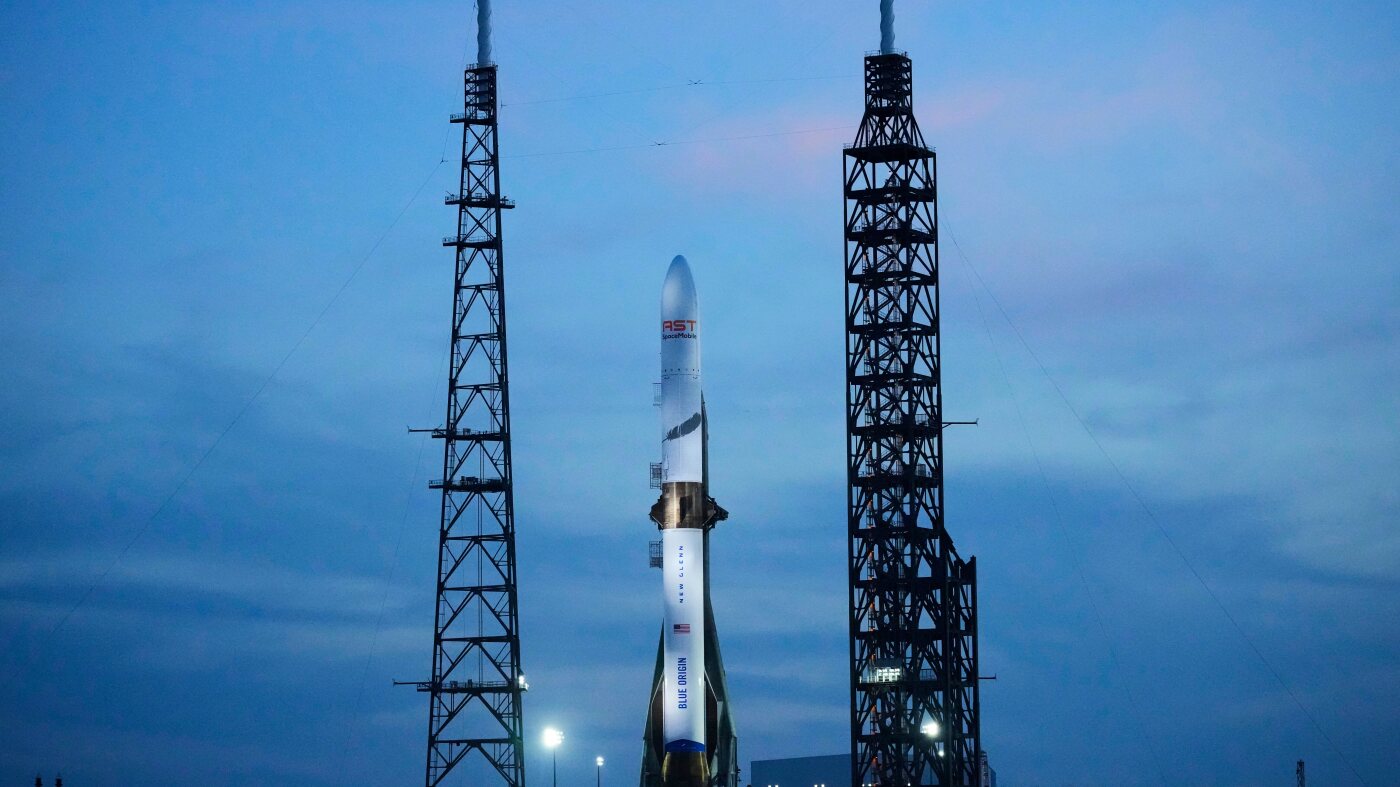
Cape Canaveral, Florida—an explosive test led to the destruction of Jeff Bezos’ Blue Origin rocket, the New Glenn, at a launch pad on Thursday night. The blast shook homes nearby and lit up the sky with a bright orange glow.
The incident occurred during an engine-firing test ahead of a scheduled satellite launch next week. Fortunately, no injuries were reported, according to officials at Cape Canaveral Space Force Station.
Bezos expressed his commitment on X, saying, “It’s too early to know the root cause, but we’re already working to find it. It’s a tough day, but we’ll rebuild and get back to flying.” He underscored the challenges of spaceflight, which can sometimes be unforgiving.
This isn’t the first setback for the New Glenn. Earlier this year, the massive rocket was grounded after a satellite launch went awry due to engine failure. That incident was a major disappointment as Blue Origin aimed to use the New Glenn for vital NASA missions, including launching landers to the moon.
NASA Administrator Jared Isaacman acknowledged the difficulties in developing new heavy-lift rockets. He said, “Spaceflight is extraordinarily difficult,” and promised updates on any potential effects on the Artemis program, designed to return humans to the Moon.
Images of the explosion quickly circulated on social media, sparking questions and concerns among locals in Cape Canaveral and Cocoa Beach. Many turned to platforms like Twitter to share their shock and to gather information. A clear demonstration of the public’s fascination with space exploration and its inherent risks.
Blue Origin had exciting plans ahead, including the launch of a prototype lunar lander this fall. This explosion, however, casts a shadow over their schedule. The company recently won a substantial NASA contract to launch moon buggies in the coming years as part of its Artemis program commitments.
The New Glenn, towering at 321 feet, is designed to rival other heavy-lift rockets and was named in honor of astronaut John Glenn. The rocket’s previous success in launching tourists to the edge of space was a positive sign, yet the challenges it faces now are a stark reminder of the hurdles in making space travel safe and reliable.
Despite this setback, other companies like United Launch Alliance and SpaceX are proceeding with their launch schedules. ULA’s Atlas V rocket is still set to launch soon, showcasing that space exploration continues amidst challenges.
As the community and Blue Origin assess the fallout, the resilience required in the field of space exploration is evident. Challenges like these often pave the way for future advancements and lessons learned, an essential aspect of pushing the boundaries of what’s possible in space travel.
