
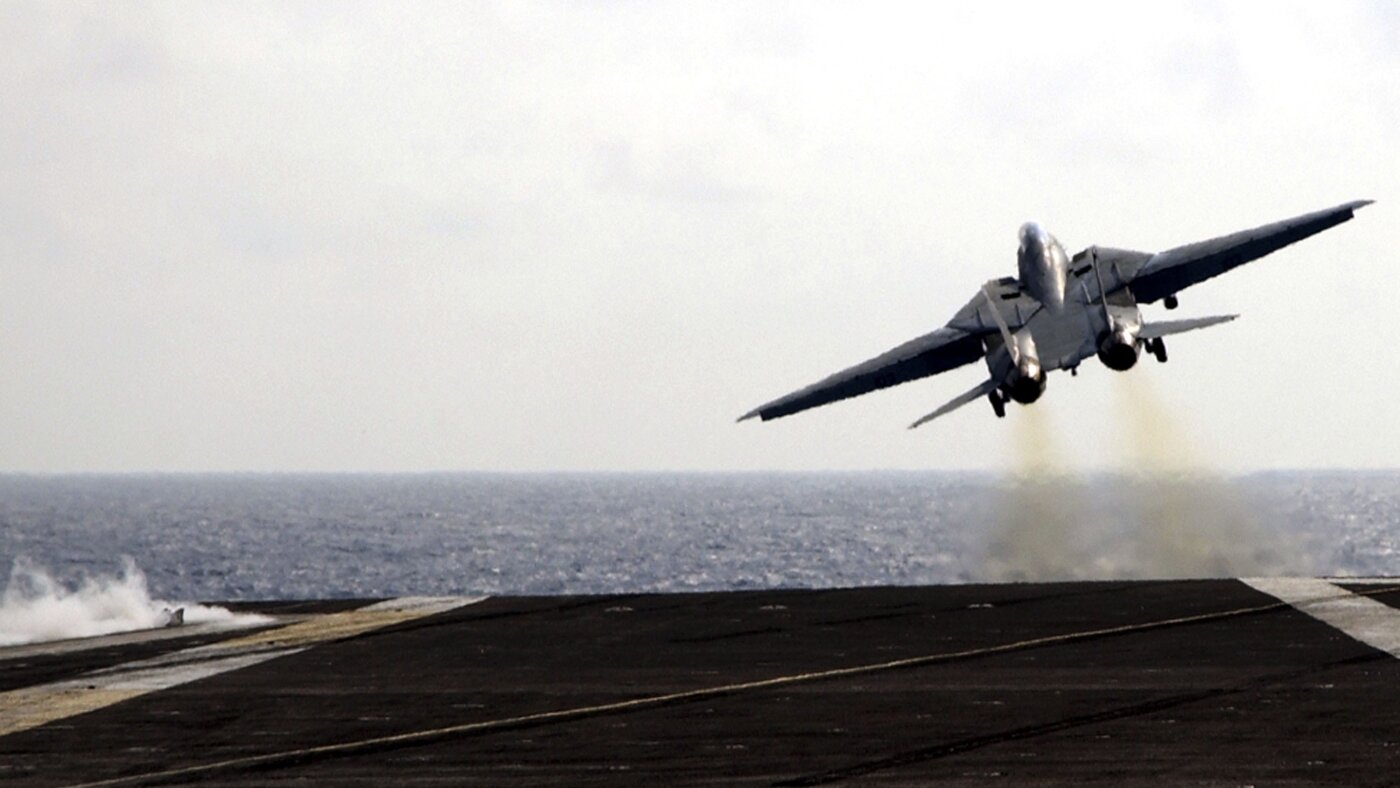
Since the Iran conflict began, retired U.S. Navy Cmdr. Ward Carroll has been watching satellite images of Israeli airstrikes. They seem to show strikes on Iranian F-14 fighter jets, the same type he flew in the 1980s and 1990s. He suspects this could mean the end for the last operational F-14s worldwide.
Carroll reflects on the mixed emotions he feels. While he understands the need for these tactical strikes, he feels sadness at seeing the plane that defined his military career potentially destroyed. The fate of these jets, if confirmed, symbolizes the end of a long saga. The F-14s were initially sold to Iran in the 1970s, later falling into the hands of a regime hostile to the U.S.
The U.S. Navy retired the F-14 by 2006, leaving Iran as the sole operator. Despite U.S. sanctions, Iran kept its F-14s flying, even establishing a smuggling network for spare parts. After the U.S. stopped its own F-14s, the Pentagon destroyed them to prevent Iran from obtaining parts.
The F-14 Legacy
The twin-engine, swing-wing F-14 was challenging to fly but admired for its raw power. Carroll describes it as a “muscle car” in the sky. During his service, he was the radar-intercept officer, the “Goose” to Tom Cruise’s “Maverick” in Top Gun.
Originally developed by Grumman, the F-14 flew its first mission in 1970 and became part of the Navy’s fleet in 1972. It featured advanced radar technology and introduced the cutting-edge Phoenix missile system. This aircraft was ahead of its time, according to military aviation analyst Tom Cooper, showcasing incredible warfighting capabilities.
How Iran Acquired the F-14
Iran’s connection to the F-14 dates back to May 1972 when President Richard Nixon visited Tehran. The Shah of Iran eagerly sought U.S. military support. Although the deal gave Iran 79 F-14s along with spare parts and training, the 1979 Islamic Revolution shifted everything. The Shah was ousted, and a regime arose that openly opposed the U.S.
Initially, the new government considered selling back the F-14s but quickly abandoned the idea after seizing the U.S. Embassy in Tehran in November 1979. This event severely deteriorated U.S.-Iran relations.
The Impact of the Iran-Iraq War
In 1980, as U.S.-Iran relations worsened, Iraq invaded Iran. The war ignited a new purpose for the F-14s. Despite losing American support, many of Iran’s F-14s remained operational during the conflict. Estimates suggest they destroyed over 160 Iraqi aircraft, showcasing their effectiveness despite dwindling resources.
As the war progressed, Iran adopted a “self-sufficiency jihad.” They reverse-engineered parts for their F-14s and even adapted U.S. missiles for new uses. International brokers and front companies helped Iran evade sanctions and procure necessary parts throughout the years.
The F-14’s Future Uncertain
After the U.S. retired its F-14s, precautions were taken to prevent Iran from gaining access to parts, leading to the destruction of these jets in 2006. Fast forward to recent claims that Israel has destroyed several Iranian F-14s. However, skepticism remains, with experts like Cooper suggesting that some reported losses may simply be decoys.
Even with only about ten F-14s operational, the loss would be largely symbolic. Carroll notes these older jets wouldn’t stand a chance against modern aircraft like the F-18 or F-35.
Despite the F-14’s storied past, its future hangs in the balance as geopolitical tensions continue. The legacy of this remarkable aircraft serves as a poignant reminder of shifting alliances, technological advancements, and military history.
For more insights on military technology and its implications, you might find useful information at the U.S. Navy History Center.
