
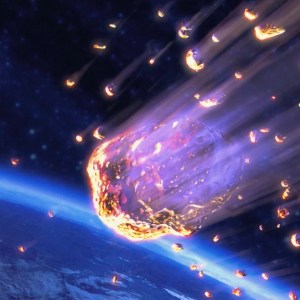
Researchers are delving into the mysterious world of interstellar objects—space rocks that come from beyond our solar system. They aim to understand what it might take for one of these objects to collide with Earth.
Recent simulations suggest that these cosmic visitors are likely to arrive with low speeds and circular orbits. Surprisingly, they might have a higher chance of impacting Earth in winter months. While this research is theoretical, it helps us grasp the potential threat these objects pose.
Interstellar objects like ‘Oumuamua, 2I/Borisov, and others have already crossed our solar system. Over Earth’s 4.6 billion-year history, it’s possible we’ve experienced collisions with some of these rocks. However, most of these objects have since moved far away, making future observations difficult.
Darryl Seligman and his team at Michigan State University set out to identify potential impact points for future interstellar visitors. They found that these objects likely originate from M-dwarf stars, which are the most common stars in our galaxy. Their research predicts that high-speed impacts are more likely in spring, while slower, low-velocity impacts tend to happen in winter, especially near the equator.
Interestingly, the objects with the highest chances of hitting Earth are also the slowest. This is because they might not orbit the sun and can get captured by its gravity, altering their paths towards Earth. Most potential impacts would likely occur in areas closer to the Northern Hemisphere, where the majority of the human population resides.
Despite decades of searching, scientists still have not conclusively detected large interstellar meteors. As Seligman notes, “The search for larger scale interstellar impactors has been debated for over a century; however, there remain no conclusive detections.”
For now, we’re safe, even if the possibility of interstellar visitors looms on the horizon. Staying informed and prepared could make a difference should another mysterious space traveler decide to drop by.
Recent studies in planetary defense are crucial in enhancing our readiness against possible threats. Resources like the NASA Planetary Defense Coordination Office work tirelessly to track near-Earth objects, ensuring that we are always one step ahead.
Source link
Solar System, Darryl Seligman, Earth, unnumbered objects, the Sun
