
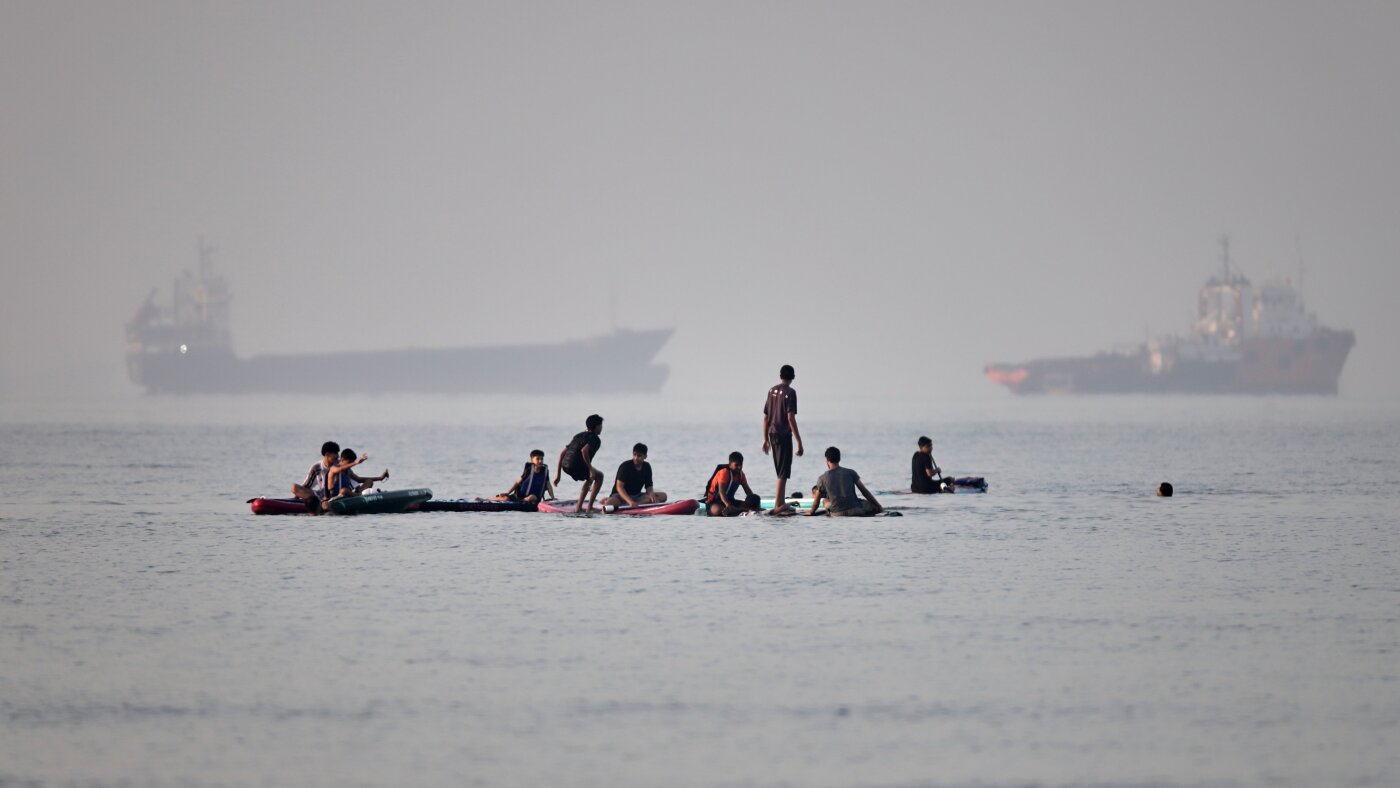
DUBAI, United Arab Emirates — Tensions are rising in the Middle East as Iran launched missiles targeting Kuwait and Bahrain. According to the U.S. military, these missiles either failed or were intercepted. In retaliation, the U.S. conducted strikes on an Iranian military facility on Qeshm Island, located in the strategic Strait of Hormuz.
The Iranian Revolutionary Guard claimed the missiles were aimed at the U.S. Navy’s 5th Fleet in Bahrain, stating that the attacks were in response to a U.S. missile hitting an oil tanker trying to reach Iran. They warned of a “different and more severe” response in case of further aggression.
After these incidents, communication between Iran and mediators regarding a ceasefire in ongoing conflicts appeared to break down. Reports indicated that Iran stopped all discussions after asserting that a ceasefire in Lebanon was necessary for continued talks. U.S. President Donald Trump, however, described reports of halted negotiations as false, insisting that discussions were ongoing.
Secretary of State Marco Rubio echoed optimism regarding the nuclear negotiations but acknowledged the challenges in reaching a satisfactory agreement. The backdrop of these events includes significant inflation in Iran, which reached alarming levels. In May, year-on-year inflation soared to 77.2%, marking one of the highest rates since World War II. This economic pressure has stoked protests across the country, including violent demonstrations in recent years linked to rising food prices and the collapsing value of the rial.
Historically, Iran’s inflation has roots in significant events. The last record high during World War II resulted from food supply disruptions and subsequent hyperinflation. At that time, instability led to widespread famine, highlighting how economic crises can fuel social unrest.
Today, the Iranian rial trades at over 1.7 million to 1 USD, a massive drop from 32,000 to 1 USD in 2015. Unless the current economic situation improves, experts warn that new protests could emerge, as rising prices make daily life increasingly unaffordable for many Iranians.
In light of these issues, analysts are keeping a close watch on Iran’s next moves. Having been put under pressure from both external conflicts and domestic economic woes, the situation remains delicate.
Source link
