
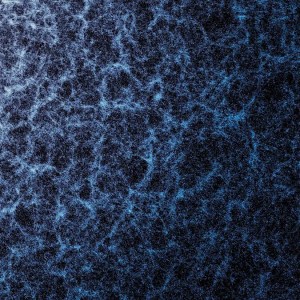
The largest 3D map of the universe has just been unveiled, and it’s a groundbreaking accomplishment. This impressive map was created by the Dark Energy Spectroscopic Instrument (DESI), which is located in Arizona. Imagine a web strung with millions of galaxies, each one an essential part of the vast cosmos we inhabit.
What makes this map truly special? It represents over 47 million galaxies and more than 20 million stars from our own Milky Way. When you look at it, those tiny dots aren’t just random; they illustrate a web-like structure formed by galaxies clumping together. Between these luminous clusters are vast regions known as voids—spaces where few stars or galaxies can be found.
So, how did they create this extraordinary view? DESI uses 5,000 robotic sensors to capture light from distant celestial objects. This means that some of the light reaching us took billions of years to arrive, offering a glimpse into the universe’s past. With this data, scientists can analyze how galaxies have moved and grouped over time.
Research from DESI is crucial for understanding dark energy, the mysterious force driving the universe’s expansion. About 70% of the universe consists of dark energy, and we still have much to learn about it. Early findings suggest that dark energy might actually change over time, which could reshape our understanding of the universe entirely.
The international team behind this project includes over 900 researchers from 70 institutions. It’s fascinating to think about how collaboration on such a grand scale can yield insights that alter scientific perspectives.
Looking ahead, DESI’s mission will continue until 2028. The next phase will involve mapping even fainter galaxies and observing regions near the Milky Way that are often obscured by bright stars. The first full data results are expected in 2027, promising more revelations about our universe.
This monumental mapping effort reflects a growing trend in modern science—data-driven exploration. Ingenious technology, combined with the collective intellect of scientists worldwide, is pushing the boundaries of our understanding like never before.
Curious readers can explore more about dark energy and the implications of this new mapping on platforms like Live Science.
Source link
Kitt Peak National Observatory, cosmic web, DESI, map, the universe, Member Institutions
