
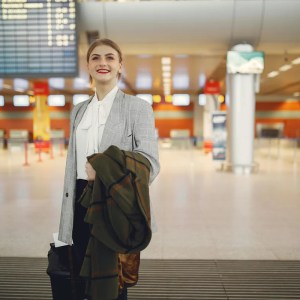
It was supposed to be a smooth day at the airport, but things quickly took a different turn. Our connecting flight was delayed, and the terminal bustled with travelers, each in a hurry. People rushed past, luggage rolling and clicking behind them.
Next to me, a couple argued quietly. The wife was in tears, and I couldn’t help but feel for them. “Uh-oh, he’s in trouble,” I thought as I walked by, trying not to gawk. Airports can bring out a strange energy. It’s rarely upbeat. Today felt especially chaotic.
When I finally reached my gate, I saw a few people ahead of me. To pass the time, I popped in my headphones and listened to a podcast. The first two travelers were served quickly, but the third was a different story. He was a man in business attire, visibly upset. Before the gate agent could even speak, he launched into a rant. His frustration was palpable as he gestured wildly, making it clear he wanted everyone to understand his woes.
The gate agent, an exhausted-looking woman, tried her best to stay calm. Eventually, she said, “I’m sorry, but there’s nothing I can do. It’s outside my control.” His reaction was predictable. “Of course, it’s always outside your control. It’s never anyone’s fault,” he shot back, clearly unhappy.
As he walked away, I felt a mix of shock and disappointment. Why do some people take out their frustrations on others? Airports have an uncanny ability to amplify negative emotions. There are countless videos online highlighting these moments, capturing the drama that unfolds.
In the gap that opened up at the gate, I stepped forward. The agent looked a bit relieved to see someone else. I smiled and asked a simple question about my rescheduled flight, feeling the weight of the previous interaction. I added, “I’m sorry people are rude. It seems unfair.” She appreciated the kindness, saying, “It’s not usually this bad every day.”
Then, she paused and asked if I had received my seat assignments. Before I could finish my thought, she requested my tickets. With practiced speed, she tapped on her screen. I braced myself since my spouse and I had been assigned terrible seats. But to my surprise, she looked up and offered, “How about seats near the exit door?” I couldn’t believe it. “Absolutely!” I replied excitedly.
The new seats were a huge upgrade. Instead of cramped quarters, we settled into spacious exit row seats. Soon, I heard the printer whir, and she handed me our new tickets. I looked down, thrilled, and thanked her profusely.
As we sat in our upgraded seats, stretching out our legs, I realized my intention had been simple: to empathize. I hadn’t expected anything in return, but her kindness reminded me of something important. A little compassion can go a long way, especially in a hectic place like an airport, and it often costs nothing at all.
Interestingly, customer service experts suggest that small gestures can significantly affect morale—in both employees and customers. A recent survey indicated that about 70% of people appreciate extra kindness in stressful situations, highlighting the ripple effect of positive interactions.
So next time you find yourself in an airport, remember that we’re all in this together. A little bit of kindness can brighten someone’s day, and who knows? You might just end up with a better seat.
Source link
connecting flight
