
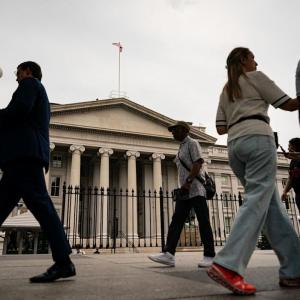
Sovereign bonds are making a comeback as worries about the Middle East conflict grow. Investors are seeking safety in government debt, which had been out of favor recently.
US Treasuries saw a boost, along with UK and Japanese bonds, as rising oil prices stirred fears of a fuel shortage. This shift in perspective is making government debt more attractive. Traditionally, bonds are seen as a safe bet during uncertain times.
Gareth Berry, a strategist at Macquarie Group, noted that the situation feels reminiscent of the early days of COVID-19 when economies were under strain. A continued lack of fuel could put a damper on economic recovery.
For weeks, bond markets faced selling pressure fueled by rising oil prices and potential interest rate hikes from central banks. However, the recent focus has shifted to fears of slowing economic growth. This has eased worries about inflation and aggressive policy responses from central banks.
In the latest bond market activity, yields on two-year Treasury notes dropped to 3.85%. Trader sentiment also changed, with many now expecting fewer interest hikes from the Federal Reserve this year. This shift comes as swaps for the December Fed meeting indicate little chance of an increase.
Investors are keenly awaiting comments from Fed Chair Jerome Powell, who will speak at Harvard University. His insights on growth and inflation in the coming months will be crucial.
In Europe, bond yields fell as well, with UK and German 10-year yields decreasing to 4.92% and 3.04%, respectively. Japan’s 10-year bonds also saw a slight drop.
Some experts suggest that the recent rise in bond prices may continue as concerns about potential growth slowdowns overshadow inflation worries. Garfield Reynolds, a strategist at Bloomberg, highlighted this shift in market focus.
Major bond funds in the US, like Pacific Investment Management Co., warn that the risks tied to the ongoing conflict could trigger a noticeable economic slowdown. Goldman Sachs has increased the likelihood of a downturn over the next year to about 30%.
The ongoing war has caused Brent crude prices to soar, with reports of an increase above $115 a barrel. This has implications for global markets. As the conflict enters its second month, the pressure on fuel supply becomes more pronounced.
Matthew Hornbach from Morgan Stanley advises buying five-year Treasuries, anticipating that further increases in energy prices could threaten economic growth.
Wall Street’s Ed Yardeni mentioned the global bond market’s overreaction to the conflict, suggesting that some areas may be oversold. He believes the front end of the yield curve is overestimated regarding impending policy changes.
The events unfolding echo past moments in history when geopolitical issues significantly impacted financial markets, leading to shifts in investor behavior and economic outlook. The interconnectedness of these factors underlines the need for continued observations in the bond market as the situation evolves.
For further insights on the bond market and related topics, consider checking resources like Bloomberg.
Source link
Bloomberg, basis points, government debt, inflation expectations, Sovereign bonds, Gareth Berry, fuel shortage
