
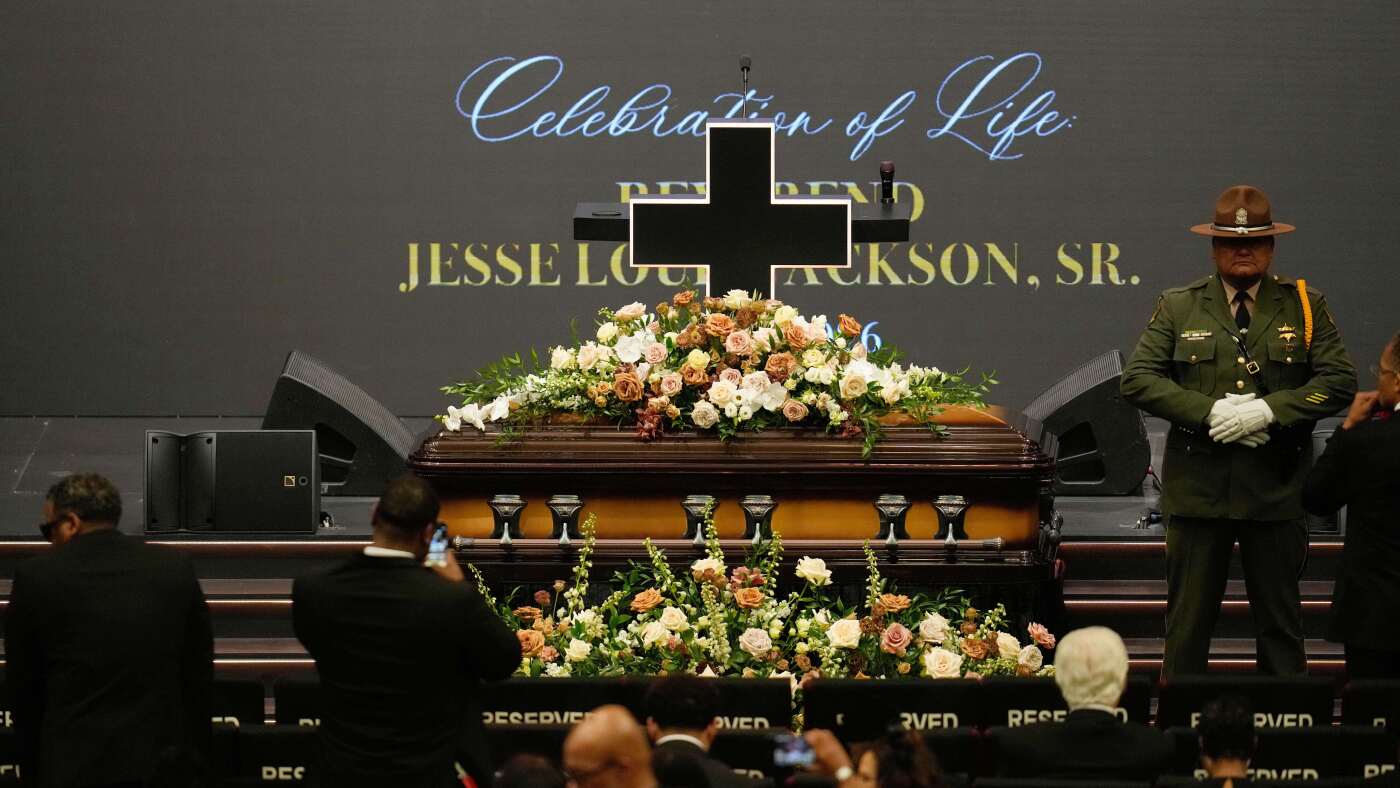
The Rev. Jesse Jackson’s influence was evident during his funeral service in Chicago, where family, friends, and notable figures, including three former U.S. presidents, gathered to celebrate his life. Attendees echoed Jackson’s powerful motto, “I am! Somebody!” This phrase emphasizes the importance of recognizing everyone’s worth, regardless of race or financial status.
Former President Barack Obama highlighted Jackson’s role in paving the way for social change, notably in the 1980s when he demonstrated that a Black presidential candidate could be taken seriously. Obama encouraged all to be agents of change in their communities.
Jackson’s commitment to helping others, even facing health challenges, was underscored by his son, Yusef. He recalled his father’s determination to uplift those affected by war and poverty, stating, “Keep hope alive,” a mantra Jackson often repeated.
Speakers throughout the service spotlighted Jackson’s legacy. Former presidential candidate Kamala Harris reflected on how they anticipated the current political landscape but lamented Jackson’s absence during these challenging times. Many credited Jackson for inspiring their careers. Judge Greg Mathis shared how Jackson’s words transformed his life trajectory from a troubled youth to a prominent figure in law and television.
Isiah Thomas, an NBA Hall of Famer, shared a personal story about encountering Jackson in his childhood. During a difficult period in his family’s life, Jackson’s message that “you are somebody” had a profound impact on Thomas.
Statistically, Jackson’s influence remains relevant; surveys indicate that over 70% of people believe that civil rights activism is still necessary today. This reflects the ongoing struggle for equality and justice that Jackson dedicated his life to.
In a world still grappling with division and inequality, Jackson’s messages of hope and resilience continue to inspire individuals across generations. His legacy urges everyone to recognize their inherent value and strive for change wherever they can.
For more on the ongoing impact of civil rights activism, check the Pew Research Center.
