
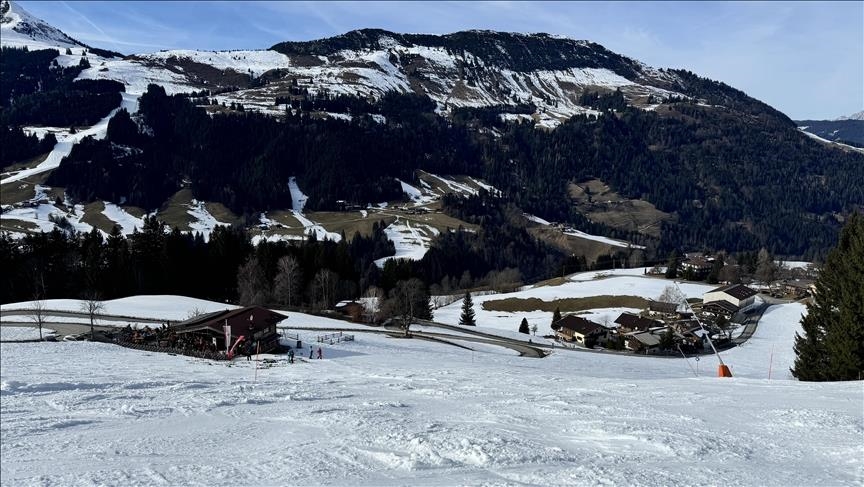
The Austrian Alps are heating up almost twice as fast as the global average. This increase in temperature is leading to faster glacier melting and forcing ski resorts to rely more on artificial snow. Winter tourism, crucial to the region, is facing serious changes.
As temperatures rise, the seasons are shifting. Lower altitudes are seeing less snow, and water shortages are becoming an issue for ski operations and mountain huts. These climate changes pose significant risks. Many reports highlight them as a top concern for humanity.
According to a recent report in the Anadolu series “Europe’s Peak: The Alps,” higher temperatures are already affecting tourism. Long-term monitoring shows that the ice is disappearing and precipitation is changing.
Despite these environmental challenges, the Austrian National Tourist Office reports that over 20 million people are still planning to visit Austria this winter. This shows strong demand, even as the environment changes.
The Austrian Alpine Club (Alpenverein Osterreich) has been monitoring the Alps for years. Volunteers monitor 26,000 kilometers of trails and over 200 climbing sites. Their findings reveal that glaciers are retreating significantly. In the recent 2023-2024 period, they receded by an average of 24.1 meters (79 feet), marking one of the largest annual losses ever recorded.
Water shortages at higher altitudes are forcing some mountain huts to close while others make costly upgrades to keep operating. The conditions for mountaineering are becoming more challenging. Unstable terrain, mudslides, and loose rocks are becoming common as glaciers shrink.
Weather patterns are also changing. Instead of snow, winters are often bringing rain, along with stronger storms and droughts during summer months.
Anna Praxmarer from the Alpenverein shared her insights, emphasizing the impact on wildlife. Animals like alpine hares are losing their camouflage without snow cover, making them more vulnerable to predators. She noted flooding on trails and severe water shortages at mountain huts, indicating a broader environmental crisis.
Praxmarer provided a stark prediction: “The climate crisis is hitting the Alps hard. It’s likely that Austria’s glaciers will largely disappear within 40 to 50 years.” This sobering outlook highlights the urgent need for awareness and action regarding climate change in the Alps.
For more detailed information on climate change and its effects, you can refer to resources such as the Intergovernmental Panel on Climate Change (IPCC).
Source link
Austrian Alpine Club,Austrian Alps,climate change,Anadolu Ajansı
