
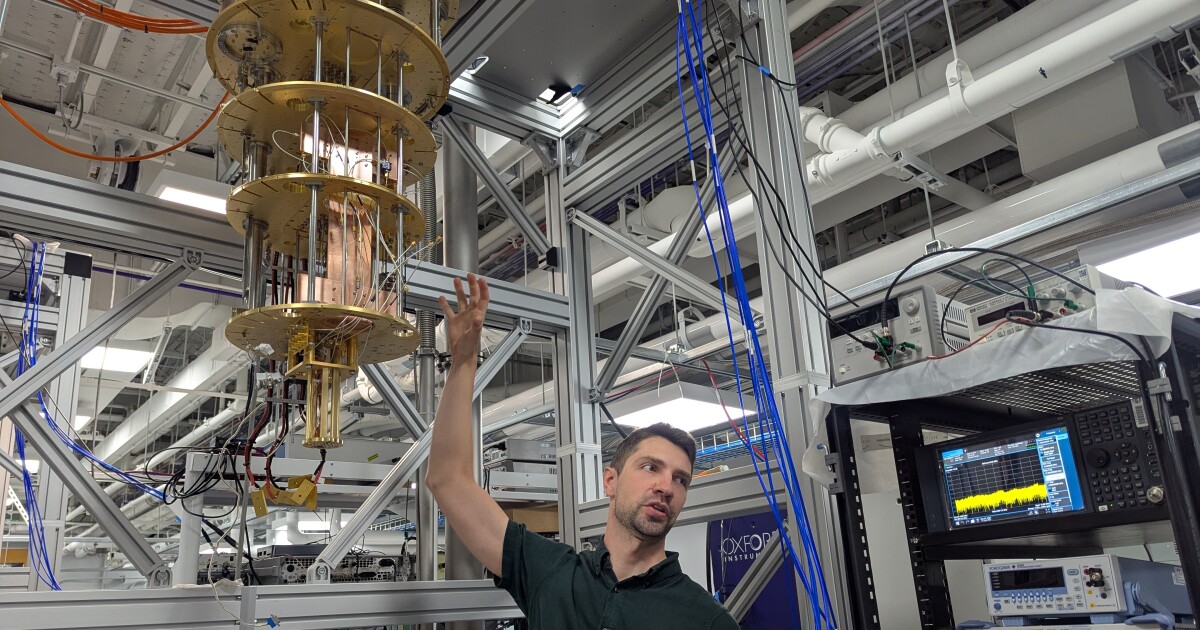
The University of Pittsburgh recently launched a cutting-edge research lab aimed at revolutionizing multiple fields, including transportation and healthcare. This new facility, called the Western Pennsylvania Quantum Information Core (WPQIC), opens doors for scientists to investigate how materials behave under extreme conditions like high pressure and low temperatures.
Rob Cunningham, the Vice Chancellor of Research Infrastructure, shared that this lab fosters collaboration between physicists, engineers, and other experts. “When different fields come together, we can create new quantum computers and sensors,” he explained. These inventions could lead to advancements in making cars and planes more aerodynamic, better climate change models, and quicker diagnoses for diseases such as cancer and Alzheimer’s.
“The thrill of science is that it often leads us to unexpected discoveries,” Cunningham noted. “We have theories about how everything works, but we need empirical testing to really understand.”
This $11.6 million lab, which took over four years to complete, is filled with advanced equipment. Among its notable features is a dilution refrigerator that cools objects to an astonishing 20 millikelvin. To put this in perspective, that’s just 1/20,000th of a degree above absolute zero—the coldest temperature possible in the universe. At such low temperatures, atomic particles can behave in fascinating ways, existing in multiple states at once.
The lab doesn’t just serve scientists; it also provides immense opportunities for students. Michele Manuel, dean of the Swanson School of Engineering, pointed out that the growing quantum industry is in need of skilled engineers. “Having state-of-the-art facilities like WPQIC will attract the best faculty and students. The top talent in quantum research wants to be where the best instruments are, and that’s now at Pittsburgh.”
This investment in quantum research aligns with a national trend. According to the U.S. Department of Commerce, U.S. companies are expected to invest up to $1 trillion in quantum technology over the next few years. Social media voices are buzzing about this development, reflecting excitement over the possibilities this research could unlock.
Overall, the WPQIC represents a significant leap forward in our understanding of quantum science, driving innovation, attracting talent, and ultimately changing how we approach complex problems across various disciplines. For more information on quantum research and its potential, check out this report from the U.S. Department of Commerce.
