
The market for monoclonal antibodies in veterinary health is growing rapidly. These therapies are becoming popular due to the rise in chronic diseases among pets and the trend of treating pets like family members. As pet owners look for safer treatments, monoclonal antibodies are gaining traction, although their high costs can be a barrier to entry.
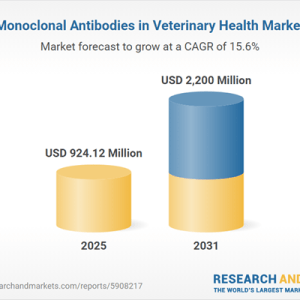
According to a recent report, the monoclonal antibodies market is expected to grow from $924 million in 2025 to $2.2 billion by 2031, with an impressive annual growth rate of 15.61%. This surge is driven by the increasing incidence of conditions like cancer and osteoarthritis in pets, along with a demand for specialized treatments with fewer side effects compared to traditional drugs.
Experts from the American Veterinary Medical Association noted that in 2025, the U.S. dog population reached 87.3 million. This growing number of pets indicates a larger market for these advanced therapies. Pet humanization trends are prompting owners to seek out better medical care, paralleling how we approach healthcare for ourselves.
Yet, the financial aspect remains a challenge. The development and manufacture of these biologic drugs are costly. A report highlighted that 30% of dog owners and 22% of cat owners cut back on vet visits, primarily due to affordability issues. This shows a critical gap where many pet owners can’t afford advanced treatments, leading them to stick with cheaper options.
Interestingly, the rise of pet health insurance is helping. More pet owners are now willing to explore treatments like monoclonal antibodies. The American Pet Products Association reported that spending in the pet industry reached $152 billion in 2024, with a record $4.7 billion in pet insurance premiums. This financial backing can help pet owners cover high-value veterinary care.
Moreover, the focus of monoclonal antibodies is expanding. Developers are increasingly targeting infectious diseases in addition to chronic conditions. For example, recent advancements include treatments for canine parvovirus that not only manage symptoms but also combat the virus itself. In fact, a study showed that 93% of puppies treated with monoclonal antibodies for parvovirus survived, showcasing a significant success rate.
Major players in this field include Zoetis Inc., Elanco Animal Health, and Merck. These companies are forming partnerships to speed up drug development and take advantage of new technologies. In July 2024, Dechra Pharmaceuticals acquired Invetx to access a pipeline of specialized monoclonal antibodies, indicating a trend toward collaborative innovation in the industry.
This market is at a pivotal point. While growth seems promising, the affordability issue remains a critical challenge. Addressing the balance between innovation and access could shape the future of veterinary medicine and improve health outcomes for our beloved pets.
For more details on this emerging market, you can check the report from Research and Markets.
Source link
Monoclonal Antibodies, Veterinary Health, biologic drugs, chronic diseases, Elanco Animal Health
