
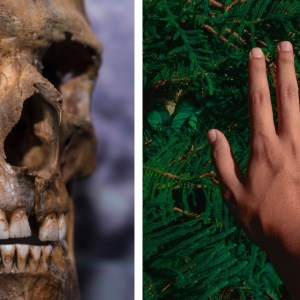
Since the dawn of humanity, most people have been right-handed. It’s a curious fact, considering that in the animal kingdom, handedness is often balanced. Studies indicate about 90% of humans favor their right hand, which raises questions about why this preference developed.
Recent research from the University of Oxford suggests this right-handed dominance might be linked to two major milestones in human evolution: walking on two legs and the growth of larger brains. These changes may have influenced how we used our hands, steering us toward more specialization.
Insights from Research
The Oxford study examined 2,025 monkeys and apes from 41 species. Researchers explored how various factors like tool use, social behavior, and brain size related to handedness. Initially, nothing stood out until they considered the size of the brain alongside limb proportions. Humans, with our distinct brains and longer legs compared to arms, showed clear patterns of right-handedness.
Thinking back, ancient ancestors like Ardipithecus and Australopithecus walked upright. This transition likely led to a natural preference for using one hand over the other. Initially, handedness was likely more equal between left- and right-handers. But as human brains evolved, they became more adept at complex tasks, which may have contributed to the rise of right-handed dominance, dating back as far as 2.6 million years ago.
The Brain Connection
The left hemisphere of our brain controls motor functions on the right side of the body, including hand coordination. This link emphasizes why many humans gravitate toward right-handedness. Additionally, humans learn behaviors through imitation, likely reinforcing the right-hand preference within families over generations.
The Contribution of “Hobbit” Ancestors
Interestingly, another evolutionary clue comes from the “hobbit” species discovered in Indonesia. This group, known for its smaller stature, displayed less right-hand dominance and had a broader range of movement capabilities. It highlights the variances in handedness among our ancient relatives.
Final Thoughts
Understanding why most humans are right-handed is still a work in progress. Exploring left-handedness and the limb preferences of other species could reveal more about our evolutionary journey. Each detail matters, reminding us that our seemingly simple characteristics tell a profound story about who we are and where we come from.
For more insights on the evolution of handedness, check out the study published in PLOS Biology.
Source link
evolutionary factors, primates, evolutionary standpoint, humans, Human skull
