
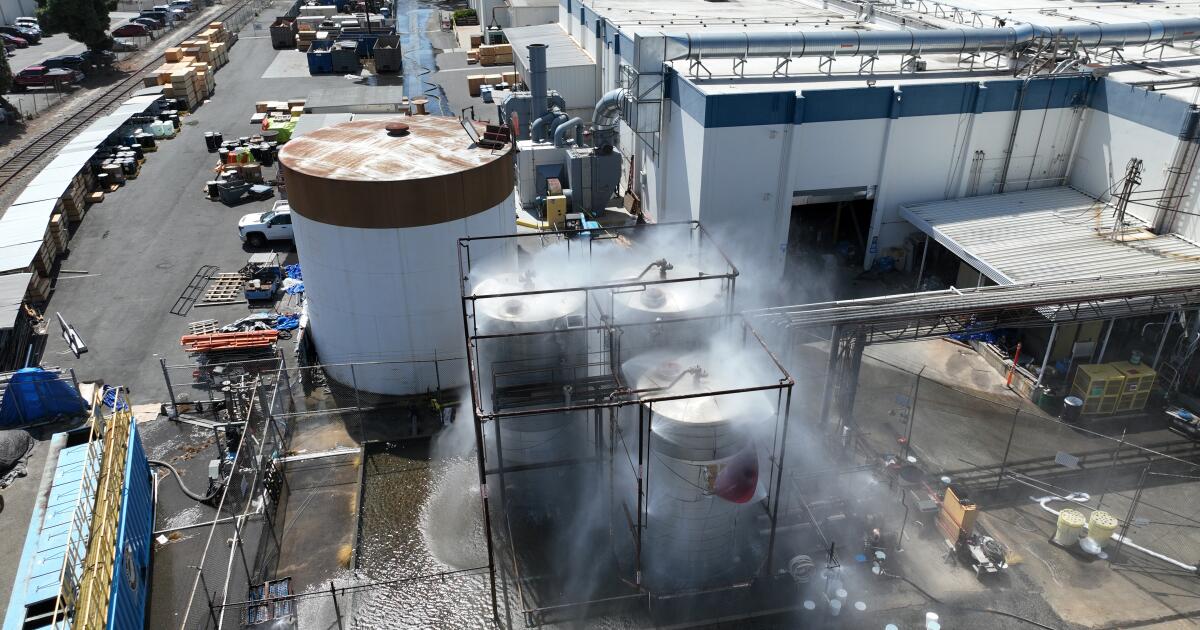
A hazardous situation is unfolding in Orange County. A large tank holding a toxic chemical known as methyl methacrylate (MMA) poses risks of exploding or leaking. Thankfully, fire crews have made progress in cooling the tank, bringing its temperature down to 61 degrees, with a target of 50 degrees to stabilize it. However, it remains unsafe for residents to return.
MMA is commonly used in plastics production, valued for its lightweight and durable properties. Despite being safe in its polymer form, the liquid form of MMA is toxic. If released into the air, it can harm people through both short-term exposure and long-term effects. The main concern is an explosion, which could happen if the temperature exceeds a critical point, causing a dangerous chain reaction known as a “thermal runaway.”
“The risk of a thermal runaway reaction is significant,” says Elias Picazo, a chemistry professor at USC. If the reaction starts, it could produce uncontrollable heat leading to catastrophic failure. This situation escalated on Thursday when the tank began overheating and bulging, signaling trouble.
The crisis started in Garden Grove when the tank’s temperature unexpectedly rose. Investigating the cause is essential, as such incidents shouldn’t happen without a triggering factor.
The immediate response strategy focuses on cooling the tank. Crews initially used sprinklers but faced challenges as some valves were blocked, preventing them from offloading a neutralizing agent. This blockage is troubling because it may mean that MMA has solidified in the valve, making it impossible to contain the chemical safely.
The situation is reminiscent of past industrial accidents. For instance, a recent explosion at the Chevron refinery in El Segundo caused significant damage and rattled homes miles away. In 2015, an explosion at an Exxon Mobil refinery highlighted the dangers of outdated safety procedures.
Historical context reminds us of the SS Grandcamp disaster in 1947, which claimed over 580 lives due to a chain of explosions. This tragedy led to stricter regulations in the chemical industry—regulations that are critical to preventing future incidents.
As of now, officials are working hard to keep the situation under control. Though success in cooling the tank offers hope, the threat of an explosion remains. Public safety is paramount, and as fire crews innovate strategies, residents are advised to stay vigilant and informed.
For updated information on chemical safety protocols, check out resources from the U.S. Chemical Safety Board.
