
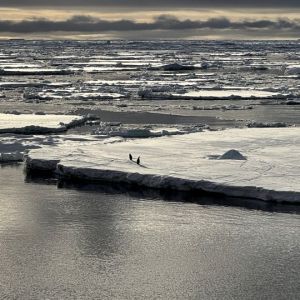
For a long time, Antarctica seemed safe from the rapid melting ice seen in the Arctic. That changed in 2015, when Antarctic sea ice no longer expanded and started to shrink at an alarming rate. Scientists have now identified the reasons behind this dramatic decline, and the implications could affect the entire planet.
Antarctic sea ice has been dropping steadily for nearly ten years. It hit a record low in 2022 and then again in 2023, when it fell to just 691,000 square miles—an area larger than Greenland. Although this year saw some regained ice during summer, it remained the 16th lowest since records began nearly 50 years ago.
Researchers have been probing the causes of this sea ice loss. A recent study highlights several interconnected factors driven by stronger winds and warming ocean water. This “triple whammy” of climate changes is causing serious disruption in the waters around Antarctica.
Aditya Narayanan, a physical oceanography research fellow at the University of Southampton, explained that the winds circling Antarctica have strengthened significantly over the past decades. This change connects to increased greenhouse gas emissions and the depletion of the ozone layer above the continent.
Initially, these strong winds cooled the ocean’s surface. But starting around 2015, the winds began to pull warmer, saltier water from the depths up to the surface. This warmer water melted more ice and created a feedback loop that made it harder for new ice to form.
As of 2018, the situation worsened. The lack of sea ice leads to a warmer salty surface, which continues to prevent the formation of new ice. Narayanan emphasized that this cascade of events highlights how climate change can lead to prolonged low sea ice levels.
Different areas of Antarctica experience varying impacts. In East Antarctica, melting is primarily driven by heat from the ocean’s depths. In West Antarctica, atmospheric factors, like warm air trapped by clouds, play a bigger role.
The loss of sea ice has serious consequences. It leaves coastal ice sheets vulnerable to erosion from waves and warmer waters, accelerating their melting. Sea ice acts like a giant mirror, reflecting sunlight away. Its disappearance reveals darker ocean water, which absorbs heat and contributes to even greater warming.
Oscar Schofield, a biological oceanographer at Rutgers University, noted that understanding these factors will help predict potential future changes. However, he pointed out that the current declines are striking and further complicate the situation.
Ted Scambos, a senior research scientist at the University of Colorado Boulder, remarked that this study provides a clearer picture of the past decade’s changes. He believes a recovery of Antarctic sea ice seems unlikely.
Experts warn that if low sea ice levels continue past 2030, the ocean might shift from stabilizing the climate to driving global warming. Alberto Naveira Garabato, another report author, emphasized that the stakes are incredibly high and highlight the urgent need for action.
With the situation constantly evolving, continued research is vital. Understanding the dynamics of sea ice loss is not just an Antarctic issue; it has global implications for climate health and weather patterns.
Source link
Antarctic sea ice, Antarctica, East Antarctica, University of Southampton, West Antarctica, Aditya Narayanan, sea ice, ice melting
