
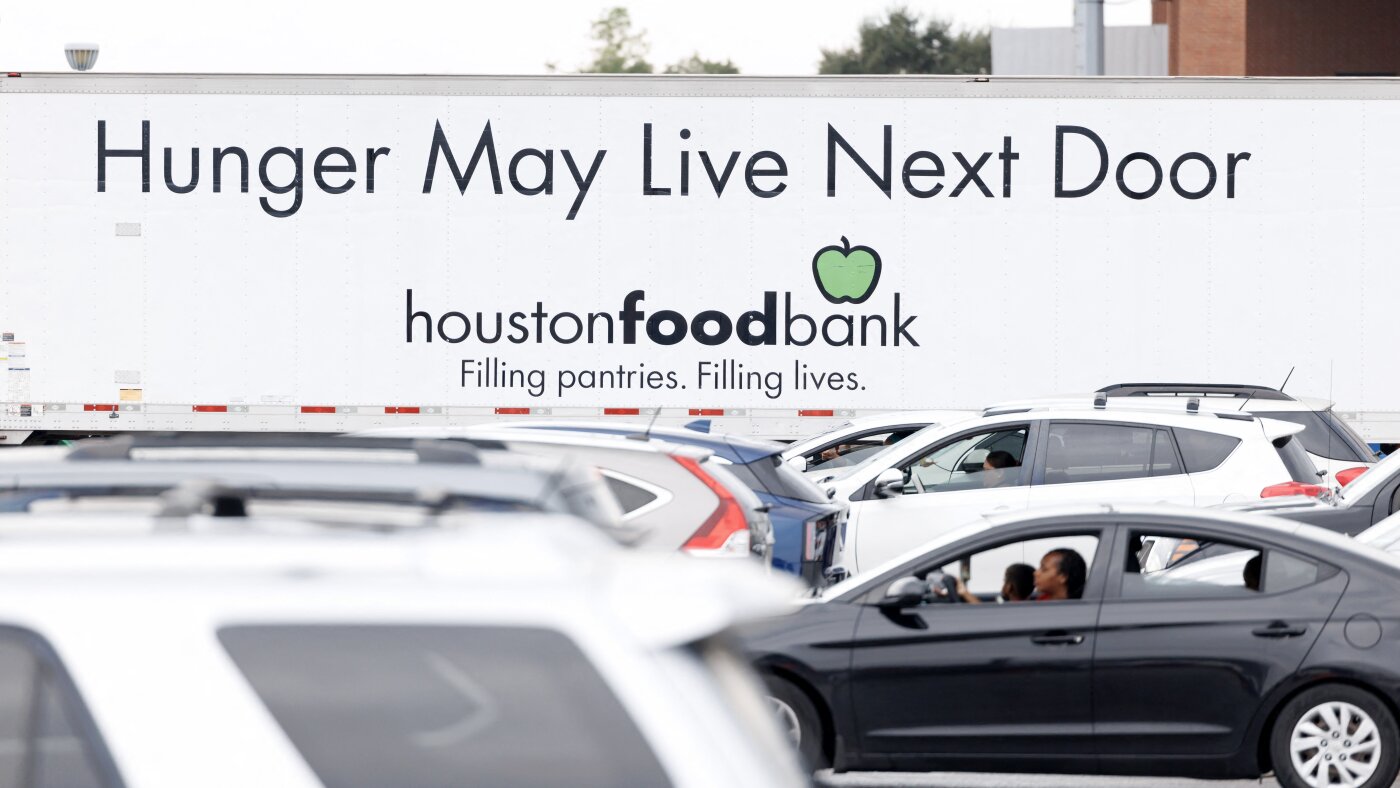
Hunger is rising in the United States, and it’s affecting more families now than at the height of the pandemic. A recent survey from the Federal Reserve Bank of New York revealed alarming statistics about food insecurity. More people are reporting they skip meals or rely on food assistance than previously.
In February, about 10% of families said they had to miss meals due to a lack of food. This number is a stark contrast to just 4% in 2020. Among families earning under $50,000, nearly 20% are going without meals. The situation highlights a growing gap between those who can afford to eat well and those who cannot, often referred to as a “K-shaped economy.” While some households thrive, others struggle to make ends meet.
Amy Breitmann, who runs the Golden Harvest Food Bank in Augusta, Georgia, has witnessed this firsthand. She noted that people are even camping out overnight in long lines for food distributions. “We have some distributions where people sit in a two- to three-mile line the night before,” she said. This paints a vivid picture of the urgency many families face.
In Alabama, the Community Food Bank of Central Alabama is expanding its services to meet increasing demand. CEO Nicole Williams believes food insecurity can affect anyone. “When costs rise, people must choose between food and other essential expenses,” she explained.
Economists from the New York Fed acknowledge that while some are doing well, a significant portion of the population is under financial strain. Their report indicates a dropped consumer sentiment, signaling a worrying trend.
Interestingly, the surge in food insecurity comes despite tightened eligibility for SNAP benefits, which are crucial for low-income families. Today, nearly 18% of families surveyed reported receiving SNAP, a noticeable increase from 10.6% in 2020. Among lower-income families, that number soars to over 38%.
Notably, the U.S. Department of Agriculture recently halted its own research on food insecurity, citing that it only contributed to fear-mongering. This decision raises questions about how we address and understand this pressing issue. With food prices continuing to climb, families must make tough decisions about their budgets, often pulling funds from groceries to cover other essential costs.
In summary, food insecurity is a growing crisis that needs attention. As more families struggle to feed themselves, solutions and support systems are critical to addressing this need.
