
Los Angeles is famous for its vast expanses of concrete. But new research shows a surprising reality: nearly half of the paved areas in Los Angeles County could be reconsidered. A recent study called DepaveLA reveals that around 44% of the county’s 312,000 acres of pavement may not be necessary for roads, sidewalks, or parking lots.
Researchers divided paved surfaces into “core” and “non-core” uses. Streets are core, while areas like parking lots often fall into the non-core category. They paired this mapping with data about heat, flooding, and greenery, aiming to show where removing excess pavement could benefit public health and the environment.
Brent Bucknum, the founder of Hyphae Design Laboratory, pointed out that almost 70% of non-essential paving is found on private property. Instead of removing pavement entirely, the focus is on small, impactful changes. For instance, in large parking lots, changing from 90-degree to angled parking could free up about 1,600 acres, allowing space for trees and stormwater systems, all while keeping the same number of parking spots.
Paved surfaces heat up more than those with plants, intensifying urban heat and contributing to ozone smog. Greener spaces can provide psychological relief to residents, enhancing their well-being.
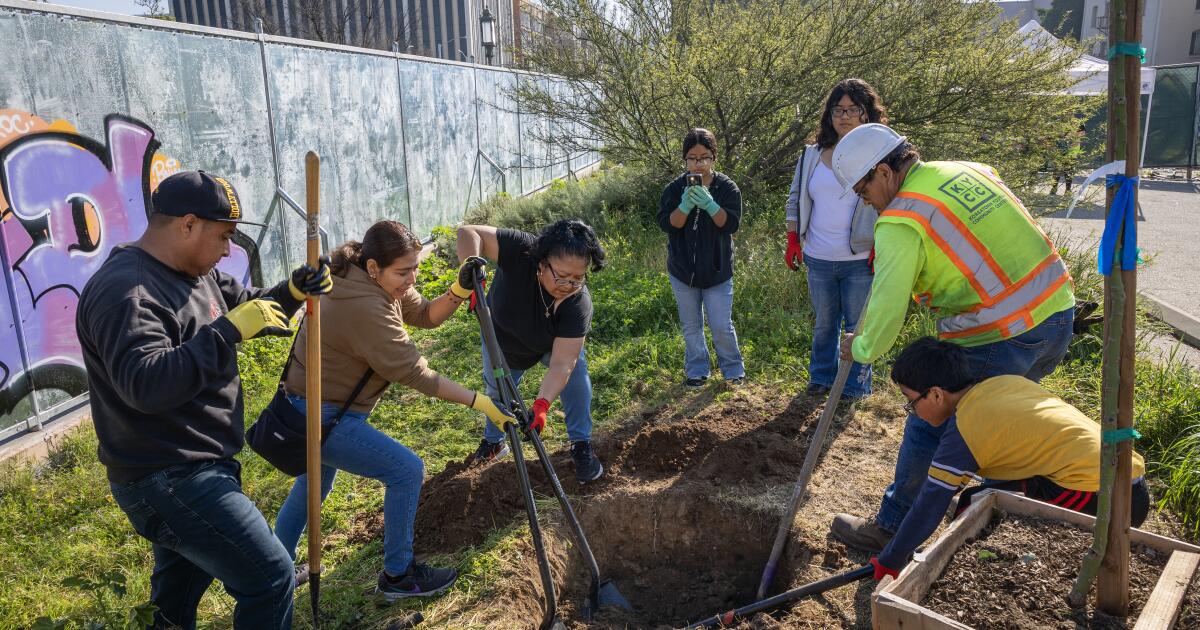
Ben Stapleton, CEO of the U.S. Green Building Council California, noted that many parking spaces have simply become accepted as necessary, impacting everyday life negatively. The report highlights that urban schools are also significantly paved over—40% of school campuses are covered, exposing students to extreme heat. Esperanza Elementary is one example where a transformation is underway to replace asphalt with native plants, shade trees, and educational spaces.
The movement to rethink pavement isn’t just about removing concrete; it’s about reimagining our environment. Emily Tyrer from TreePeople shared that homeowners often choose to pave their yards over planting greenery, primarily due to concerns over water use and rising costs.
A recent survey indicated that 67% of Los Angeles residents express a desire for more green spaces in their neighborhoods. This represents a shift in public opinion and points to a growing awareness of the benefits of urban greening.
Historically, decisions about urban infrastructure have leaned towards paving because it’s cheaper and requires less maintenance. However, changing this mindset requires education and incentives. Consider the lawn replacement programs that have successfully encouraged residents to switch from traditional turf to drought-tolerant landscapes; similar strategies could be employed for reducing pavement.
Experts like Carlos Moran from North East Trees highlight that it’s not always safe to just tear up pavement. Some areas may contain contaminated soil beneath the surface. Still, many hot spots in the city remain over-paved, presenting an opportunity for improvement.
Data from the DepaveLA project aims to spark discussions among Angelenos about reimagining their neighborhoods. Awareness of how much pavement affects urban living can change how developers and city planners approach their projects moving forward.
Ultimately, this initiative hopes to reshape Los Angeles as a cooler, healthier city, one where concrete is seen not just as a necessity, but as a choice that can be reconsidered.
Source link
