
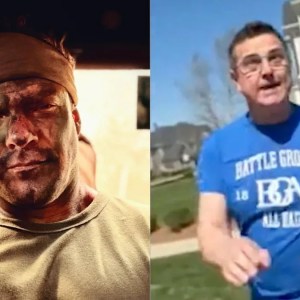
On Sunday, actor Alan Ritchson took a ride through his Brentwood, Tennessee neighborhood with his two sons. They were on mini-bikes, and Ritchson was on a green Kawasaki. What started as a family outing ended with his neighbor, Ronnie Taylor, on the ground, reportedly with a concussion. Ritchson caught the whole thing on his body camera.
Initially, a neighbor’s video showed a fight that looked as dramatic as a scene from Ritchson’s Amazon series, “Reacher.” This viral clip had many fans doing a double-take. The body cam footage, released later, added a more intense layer to the incident.
The video shows Ritchson moving at about 22 mph when Taylor confronted him in the street. After a brief exchange, things escalated. Ritchson dismounted his bike and pushed Taylor down. The situation heated up, and they ended up in a physical altercation. Taylor ended up at the ER, where he was treated for a black eye, swelling, and a suspected concussion. Despite this, he later stated he holds no ill will toward Ritchson and just wanted to address the speeding in their neighborhood.
Interestingly, while Taylor sought to share his side publicly, Ritchson kept quiet, saying he couldn’t comment on the situation. Instead, he posted a quote on Instagram from Napoleon Bonaparte: “Never interrupt your enemy when he is making a mistake.” His followers interpreted this as a clever response to the ongoing situation, and many rallied behind him.
Social media has been buzzing about this incident. Fans are drawn to the storyline, comparing it to a Hollywood script. One interesting takeaway is how public perception can shift rapidly. Initially, this was about an actor and a neighborhood dispute. Now, it raises questions about fame, accountability, and the influence of media.
As investigations continue in Brentwood, no charges have been filed. Ritchson’s next appearance will be in the upcoming Season 4 of “Reacher” on Prime Video. This incident serves as a reminder that even public figures face challenges, often under the watchful eye of an eager audience, blurring the lines between reality and their on-screen personas.
Research shows that 75% of Americans watch videos online regularly, highlighting how this incident quickly captivated public interest. As it unfolds, both Ritchson and Taylor represent different responses to conflict, influencing how similar situations might be handled in the future.
To learn more about how public figures navigate controversies, check out sources like NPR and The Guardian for in-depth analysis and expert opinions.
Source link
Alan Ritchson, Ronnie Taylor, Image credit, body cam, TMZ
