
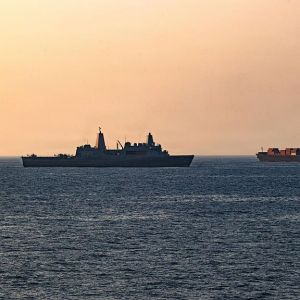
President Trump has made it clear that he intends to maintain the naval blockade of Iran. Even with oil prices hitting their highest levels since the conflict began, he insists the blockade is effective. “Their economy is crashing,” Trump stated at a recent press briefing. “We’ll see how long they hold out.”
Recently, oil prices surged, reaching $126 a barrel before settling at around $114. This increase reflects the uncertainty surrounding the Strait of Hormuz, a crucial route for global oil and gas supplies. Traders are becoming more anxious about ongoing tensions, especially since the strait has effectively been closed since the U.S. and Israel began military actions in February.
This spike in oil prices is also impacting consumers. The average price for gasoline in the U.S. has reached record highs, with California prices exceeding $6 per gallon. This situation is becoming a significant issue for Republicans as the midterm elections approach. Trump remains hopeful, stating that gas prices will “drop like a rock” once hostilities cease.
Meanwhile, Iran’s new supreme leader, Mojtaba Khamenei, has expressed doubts about a potential deal, insisting the country will not compromise on its nuclear or missile programs. Iranian President Masoud Pezeshkian described the blockade as “intolerable,” indicating rising tensions between the two nations.
Amid these developments, U.S. military commanders are reportedly preparing options to address the stalemate. Experts at Bloomberg Economics suggest that Trump may escalate military actions in the coming weeks. Analysts believe this could involve limited strikes aimed at pushing Iran for a more favorable agreement.
The conflict has deep historical roots, with tensions between the U.S. and Iran persisting for decades. The War Powers Act now looms over the current situation, requiring Congressional approval for actions that surpass 60 days. Discussions around military costs are also heating up, with estimates ranging widely. Some lawmakers argue that the actual costs of the ongoing conflict could far exceed initial figures.
As this conflict unfolds, it highlights the complex relationship between military actions and economic impacts. While the blockade aims to weaken Iran, it also poses significant challenges for economies worldwide, especially as crude oil prices continue to rise.
For an in-depth analysis of the U.S.-Iran relations and the implications of oil prices on the economy, you can read more on Bloomberg.
Source link
Donald Trump, Bloomberg, naval blockade, Iran, Strait of Hormuz, oil prices, Iran war, Tehran
