
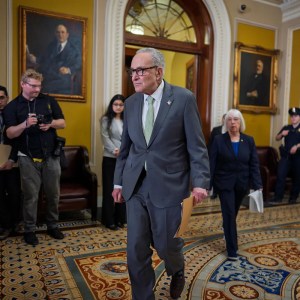
In Washington, the Senate is gearing up for a crucial vote on President Trump’s actions against Iran. This conflict has escalated in the Middle East, and Congress faces a tough challenge without a clear exit strategy.
The proposed legislation, called the war powers resolution, aims to require congressional approval before any further military actions. However, given the Republican majority, chances of it passing are slim, and Trump is expected to veto it if it does.
This legislation is significant. Lawmakers’ votes could impact U.S. troops, innocent lives, and the region’s future. Senate Democratic leader Chuck Schumer expressed concerns, stating, “Wars without clear objectives tend to escalate and become costly.” He labeled the current conflict as an unnecessary “war of choice.”
After unexpectedly striking Iran, Trump has been working to gain support from Congress. Many Americans, across party lines, are uneasy about entering another war. Trump’s administration has been busy reassuring lawmakers about the situation. Secretary of State Marco Rubio assured reporters that they would avoid placing troops in danger. Yet, reports indicate that recently, six U.S. service members lost their lives in a drone strike in Kuwait.
Although Trump aims to conclude bombings quickly, his objectives have shifted from regime change to halting Iran’s nuclear progress and weakening its military capabilities. Senate Majority Leader John Thune claimed that military actions so far have been successful, but the ultimate outcome relies on the Iranian public’s response.
Most Republican senators are inclined to oppose the war powers resolution, but some are wary about ground troop deployment in Iran. Senator Bill Cassidy mentioned, “I don’t think the American people want to see troops on the ground,” reflecting doubts about escalating military involvement.
This week’s congressional votes provide insights into where lawmakers stand on this contentious issue as midterm elections approach. Senator Tim Kaine, the Democratic leader behind the resolution, emphasized the importance of transparency: “Every member must take a stance on this war.”
Historically, Trump’s military actions have faced skepticism. Past interventions, such as those against drug trafficking, lacked the same extensive consequences. The current situation, however, has a broader regional impact and has created tension within the Republican party, previously characterized by isolationist views. Senator Markwayne Mullin pointed out, “War is ugly, but we’re addressing a regime that has threatened us.”
On the flip side, Senator Lindsey Graham sees this as a chance for collaboration with Arab and European nations against Iran. He also expressed concerns about Congress potentially overstepping its bounds regarding military authority.
Looking ahead, the House will debate the war powers resolution and vote soon. House Speaker Mike Johnson believes there’s enough support to defeat the resolution, but House Democratic leader Hakeem Jeffries expects strong backing from his party. Jeffries urged the Trump administration to communicate directly with the public about the war’s objectives, emphasizing that “the lives of American service members are at stake.”
As the situation evolves, it will be crucial to monitor public opinion on social media and survey data. A recent poll showed that 60% of Americans oppose entering another military conflict in the Middle East, suggesting a widespread desire for diplomacy over warfare. Such insights remind legislators that the voices of their constituents must guide their decisions.
Source link
President Donald Trump, Iran, congressional approval, war powers resolution, Congress, U.S. Senate, Republican-controlled Congress, Trump administration, House, lawmakers
