
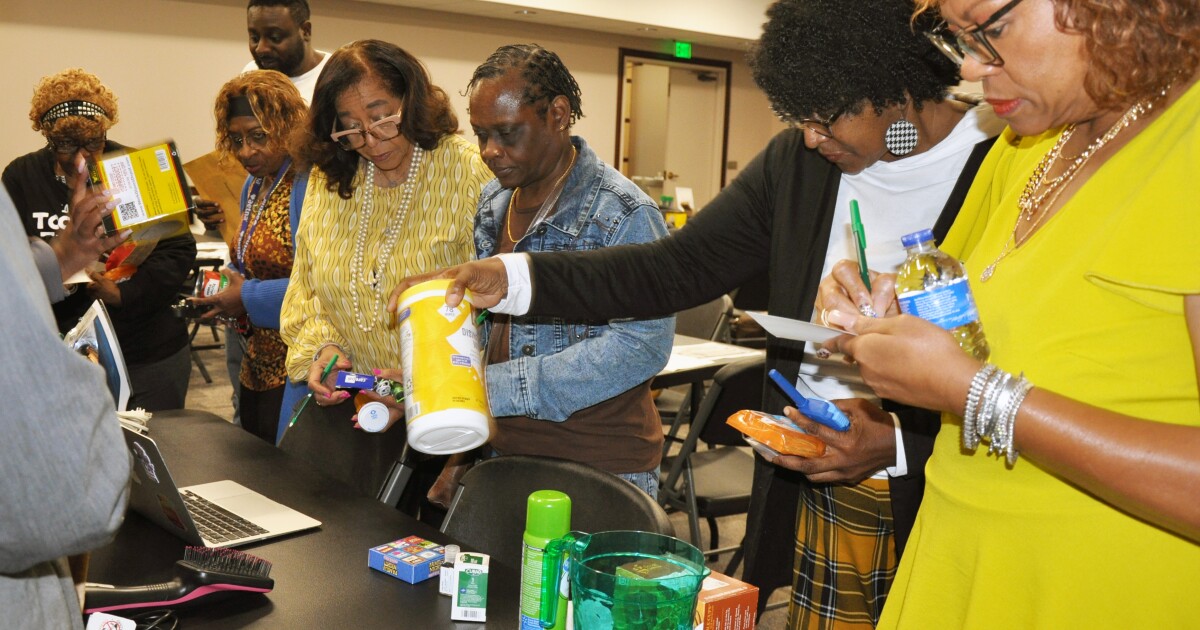
On a recent Saturday, around 20 people gathered at the North Birmingham Public Library for a unique workshop. They faced various disaster scenarios, like creating survival bags and protecting vital documents. The instructor, Yawntreshia Coleman, raised the stakes by announcing a flood was on its way.
“Birmingham is known for its flooding,” Coleman said. “You’ll need to use this flood map. It shows a house, a creek, a bridge, and an evacuation route. You must decide what to take, when to leave, and where to go.”
Coleman is the founder of Beanstalk, a nonprofit focused on helping marginalized communities deal with climate challenges and disaster preparedness. Her workshops are not just informative; they’re also competitive. Participants had to adapt to new challenges every minute, like losing phone service or a bridge closing, which kept them on their toes.
In recent years, more organizations like Beanstalk have emerged in the Southeast. These groups are responding to an increase in extreme weather, such as floods and wildfires, by equipping communities to face current and future risks.
Coleman emphasizes that her work primarily targets marginalized neighborhoods, which often lack resources and support during emergencies. “These communities are often overlooked, and that needs to change,” she explained.
So far, Beanstalk has collaborated with local emergency agencies and launched hands-on programs, offering crucial disaster-prep training for families. But Coleman’s vision goes beyond workshops. She aims to create a network of resilience centers throughout the state, providing resources and advocacy platforms for communities during emergencies.
“The centers would serve as shelter and resource hubs,” she said, envisioning spaces where people can gather to learn and prepare for disasters.
Birmingham’s government is also taking steps to tackle these issues. The city launched an Office of Resilience and Sustainability, led by Thomas Yuill. This office focuses on improving disaster preparedness and addressing environmental justice, particularly for marginalized communities.
Yuill stated, “Many environmental challenges stem from our industrial history and redlining.” By tackling these issues, the office aims to improve residents’ quality of life amidst worsening storms and higher temperatures.
Efforts include promoting sustainable transportation, using green spaces for stormwater management, and enhancing energy efficiency in homes. Birmingham is part of a growing trend, with several Southeastern cities like Mobile and Alexander City establishing similar offices.
A significant achievement for Yuill’s office is the Central Alabama Climate Action Plan. Funded by the U.S. Environmental Protection Agency, this collaborative project aims to reduce greenhouse gas emissions in the region by 2050. The plan outlines specific projects to reach these targets, focusing on the main sources of pollution: industry and transportation.
However, achieving these ambitious goals won’t be easy. Recent changes in federal regulations could make it harder for local efforts to succeed. Still, stakeholders remain committed to pushing for sustainable practices despite these challenges. Coleman agrees that reducing pollution is crucial but emphasizes the importance of helping people prepare for current disasters.
As the Beanstalk workshop concluded, participant Yolanda Hardy reflected on her experience. “I learned important questions to ask about my family’s readiness for an emergency,” she shared. She plans to discuss preparedness with her children and encourage them to attend future workshops.
For more information on disaster preparedness and climate initiatives, check out resources from the U.S. Environmental Protection Agency.
