
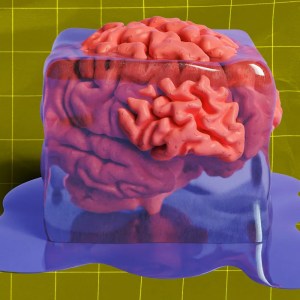
In 2014, L. Stephen Coles, a notable biogerontologist, was declared legally dead. He chose an unusual path. Coles wanted his brain preserved for future study. So, it was frozen and stored in Arizona at nearly -295 degrees Fahrenheit.
Years later, his friend Greg Fahy, a cryobiologist, took a look at Coles’ brain. After more than a decade, he found it surprisingly well-preserved. Fahy noted, “It’s astonishingly well preserved,” as he examined samples.
Coles was among the first to undergo brain-only cryopreservation, a process where only the head is preserved. This method, often called “neuropreservation,” involves removing the head post-mortem and freezing it. While many choose this option hoping to be revived someday, Coles had a different aim. He wanted to understand the effects of extreme cold on human tissue.
Fahy explained Coles was curious about whether damage, such as cracking, would happen during the freezing. Typically, intense cold damages cells, but Fahy discovered that Coles’ brain tissue held up better than expected. The combination of freezing and special chemicals helped preserve it.
While this news is promising, there are limitations. Fahy acknowledged that the brain fragments did sustain some damage. Experts like John Bischof, a cryopreservation specialist at the University of Minnesota, have expressed skepticism about restoring the brain’s function.
This story highlights a fascinating intersection of science and ethics. As technology advances, ideas once deemed far-fetched are becoming topics of serious discussion. Some researchers are exploring the brain’s resilience, revealing that scientists are just beginning to unlock its mysteries.
As we consider the implications of cryonics, it raises questions about life, death, and the essence of consciousness itself. How we interpret these findings could shape the future of medical science.
For more on brain preservation and its potential, check out MIT Technology Review and Popular Mechanics.
Source link
L. Stephen Coles, Greg Fahy, Popular Mechanics, MIT Technology Review
