
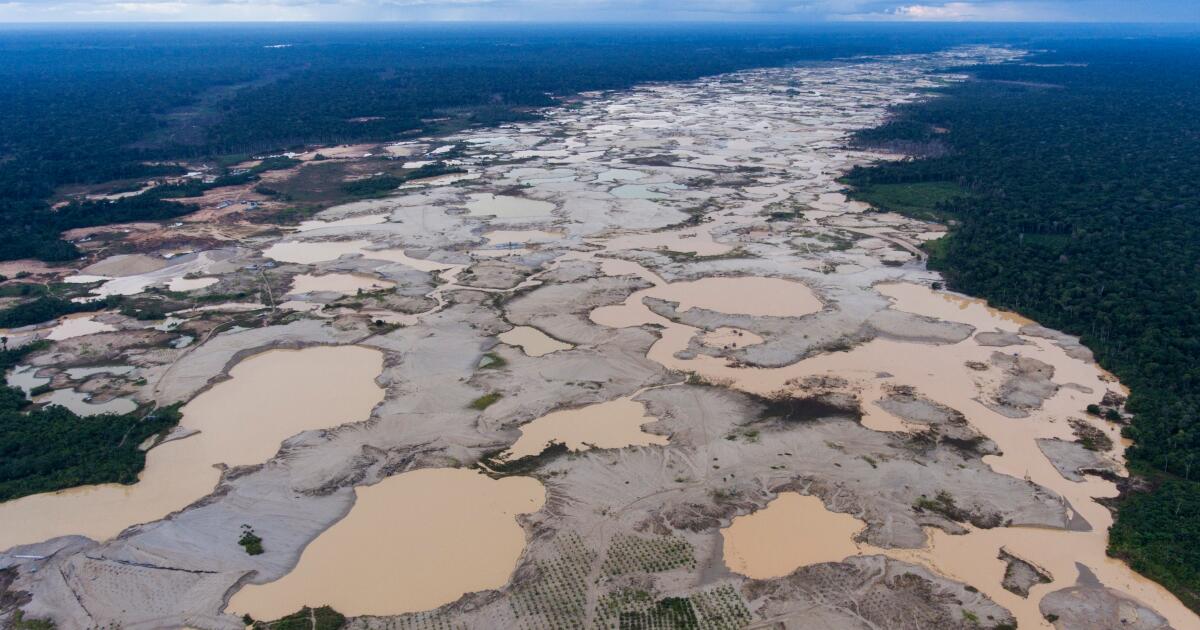
Tropical forest loss showed a big drop last year, down 36% compared to the record levels in 2024. However, the world still lost 10.6 million acres of rainforest—an area about the size of Denmark, or more than 11 soccer fields disappearing every minute.
New reports from the University of Maryland, shared with the World Resources Institute’s Global Forest Watch, reveal that the loss of mature tropical forests slowed in 2025. However, it remains 46% higher than a decade ago. Last year’s wildfires were also less intense after a devastating season in 2024. Unfortunately, warmer temperatures and severe droughts are making wildfires more common.
Outside the tropics, the situation was even harsher. Canada faced its second-worst fire year on record, burning 13 million acres. In France, tree cover loss due to fires hit an all-time high, seven times worse than the year before.
Forest loss isn’t just about deforestation; it also includes logging and natural disturbances. In 2021, at the COP26 climate summit, over 100 countries committed to halting deforestation by 2030. Yet, current losses are still too high to meet this deadline, with a 70% gap remaining, according to the WRI.
“Achieving this goal is tough,” says Elizabeth Goldman, co-director of Global Forest Watch at WRI. “Forests are becoming more vulnerable due to climate change, while the demand for their resources keeps growing.”
Agriculture is the biggest reason for tree loss in the tropics. In Brazil and Bolivia, cattle ranching and soy farming are significant culprits. In countries like Peru, other crops, including coca and oil palms, are causing harm. In the Congo Basin, clearing land often connects to shifts in farming practices and ongoing poverty.
Fires are part of this problem, consuming twice as much tree cover in recent years compared to earlier periods. While many fires begin due to human actions, rising temperatures and drier conditions fueled by climate change are enabling more severe wildfires.
Brazil, home to two-thirds of the Amazon, saw the most primary forest loss, though it reduced that loss by 42% this past year. Stronger environmental policies under President Luiz Inácio Lula da Silva played a key role in this improvement.
André Lima, Brazil’s secretary for deforestation control, recently stated that their forest policy focuses on two main areas: reducing deforestation and fighting fires. The government retried its anti-deforestation plan in 2023, and early results are promising. Lima noted a 50% drop in Amazon deforestation compared to 2022.
While some argue the fire spikes in late 2024 were due to environmental conditions rather than policy failures, Lima believes that the government’s recent funding of $380 million for fire control has strengthened their response.
Matthew Hansen, a scientist from the University of Maryland, emphasizes the importance of consistent positive changes. “A good year is great, but we need many good years ahead to preserve the tropical rainforest,” he says. “This year’s news is encouraging.”
For further reading, you might explore the World Resources Institute’s work on Global Forest Watch.
Source link
