
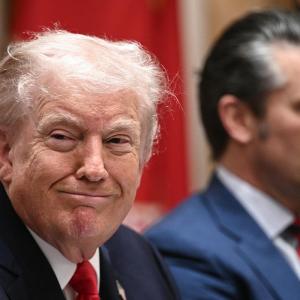
In a recent address, President Trump proclaimed the U.S. is “totally independent of the Middle East,” suggesting a push to withdraw from conflicts in the region. While he emphasized that America doesn’t need Middle Eastern oil, this view overlooks several important facts.
It’s true that the U.S. is now a net exporter of crude oil and natural gas. However, global energy markets are interconnected. A single disruption can cause prices to spike everywhere, including the U.S. Americans are currently facing gas prices above $4 a gallon, a significant increase since tensions in the region escalated. According to the American Automobile Association, this marks a rise of over a dollar in just a few weeks.
Moreover, while the U.S. exports crude oil, it still imports refined gasoline in various areas. This highlights a reliance that isn’t as simple as being “independent.”
Trump’s comments also ignore other critical products that flow through essential shipping routes, such as helium and fertilizer. Helium is particularly important for tech industries, especially in semiconductor production. Recent insights from economist Andreas Steno Larsen suggest that disruptions in helium supply could hinder advancements in artificial intelligence, revealing just how interconnected our needs are.
To illustrate this, consider that in 2022, nearly 40% of helium used in the U.S. came from international sources. Any major disruption in these supply chains could have cascading effects, not just on tech but across numerous industries.
In sum, while political rhetoric may suggest total autonomy from the Middle East, the reality is much more complex. As we navigate these challenges, understanding our interdependencies is key.
Source link
President Trump, military objectives, Iran, justification
