
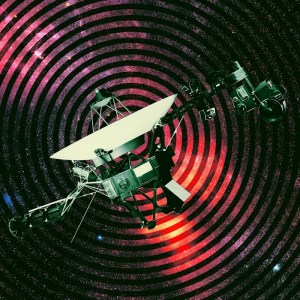
NASA’s Voyager 1 is celebrating nearly 50 years in space and is now over 15 billion miles from Earth. It’s a remarkable journey, but the craft faces serious challenges. The technology from the 1970s and the natural wear of time mean that its days are numbered.
Recently, engineers at NASA’s Jet Propulsion Laboratory made a tough decision. They shut down one of Voyager 1’s vital sensors to preserve power. The Low-energy Charge Particles experiment, which has been gathering data since the probe’s launch in 1977, was the chosen instrument to turn off. Kareem Badaruddin, the Voyager mission manager at JPL, stated, “While shutting down a science instrument is not anybody’s preference, it is the best option available.”
Voyager 1 generates power through a nuclear battery called a radioisotope thermoelectric generator. Unfortunately, this power source is losing energy at about four watts annually. Recently, during a routine maneuver, Voyager 1’s power levels dropped unexpectedly, raising alarms. If power drops too low, the probe could automatically shut down to prevent electrical issues. That scenario would make recovery extremely difficult, given its immense distance from us.
The decision to disable the Low-energy Charge Particles experiment is part of a long-term plan. Years ago, scientists decided the order of instruments to shut down in case of power shortages. The LECP has provided vital insights into particles from beyond our solar system, enriching our understanding of interstellar space.
Surprisingly, NASA kept a motor for the LECP running, just in case they find a way to turn it back on in the future. Last year, engineers successfully revived some of Voyager 1’s thrusters that had been inactive for nearly 20 years. Currently, two instruments are still functional: one measures plasma waves and the other tracks magnetic fields.
Badaruddin noted, “They are still working great, sending back data from a region of space no other human-made craft has ever explored.” The team is committed to keeping both Voyager probes operational for as long as possible.
To further extend Voyager 1’s mission, engineers are preparing a bold plan called “the Big Bang.” The idea is to turn off several devices simultaneously and replace them with more energy-efficient alternatives. This strategy aims to keep the spacecraft warm enough while still collecting scientific data.
Before executing this plan on Voyager 1, they will test it on Voyager 2, which has more spare power available. These tests are slated for this May and June.
Voyager 1 continues to inspire awe as it travels further into the unknown. As engineer teams navigate these challenges, they emphasize the importance of exploring new frontiers in our universe.
For more on NASA’s incredible discoveries, check out their latest findings here.
Source link
NASA, Voyager 2, Voyager
