
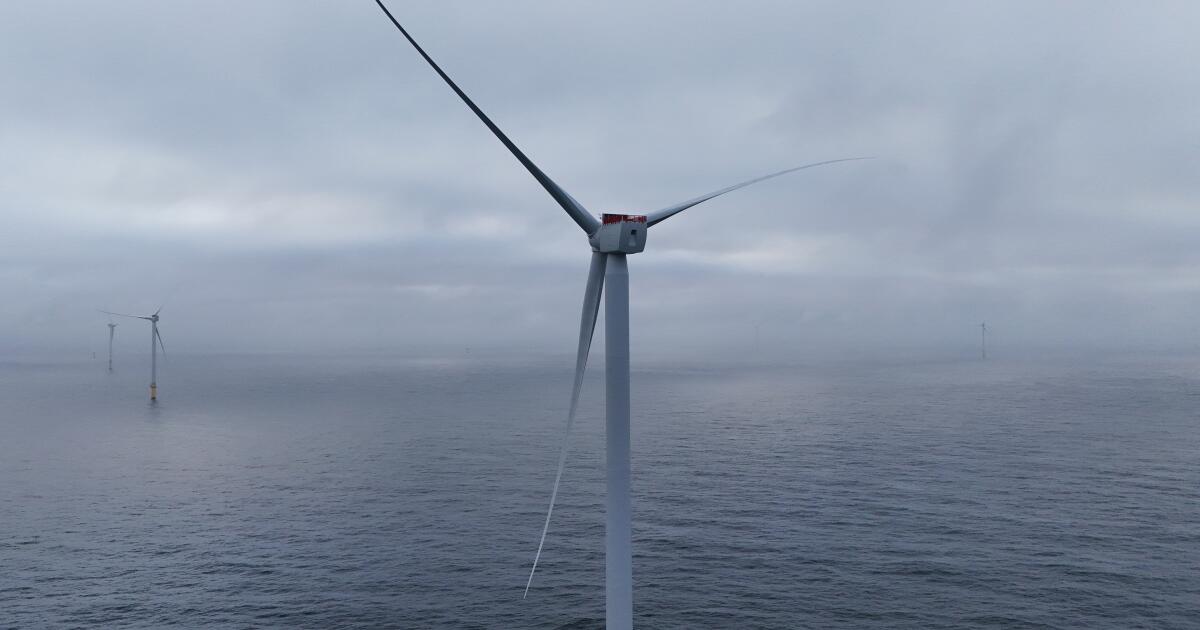
On Monday, the Trump administration announced it will pay two energy companies to abandon their offshore wind projects. This includes a wind project near Morro Bay, California. The U.S. Department of the Interior will shell out $885 million to Bluepoint Wind and Golden State Wind. These companies have agreed to invest in “reliable conventional energy projects” instead.
This decision comes after an earlier deal where the French firm TotalEnergies agreed to walk away from its offshore wind leases off the coasts of North Carolina and New York for $1 billion. Critics see this as part of President Trump’s pattern of pushing back against clean energy initiatives in favor of fossil fuels.
Golden State Wind had plans for a project that could generate 2 gigawatts of wind energy, enough to power about 1.1 million homes. According to Michael Brand, CEO of Ocean Winds North America, the company views this agreement as a chance to work positively with the administration and focus on delivering reliable energy. They express a commitment to investing in energy solutions that provide long-term value.
Bluepoint Wind was in the early stages of developing a 2.4-gigawatt wind farm off New Jersey and New York. Instead of proceeding with wind energy, they plan to invest up to $765 million in a liquefied natural gas facility. The government promises to reimburse them fully upon completion.
This move has sparked criticism from environmental groups. They argue that stepping back from offshore wind sets back California’s energy goals. Laura Deehan from Environment California emphasizes that offshore wind is crucial for a balanced clean energy strategy, especially since it generates power during peak evening times, which helps stabilize energy costs.
As this story unfolds, some lawmakers are questioning the legality of these payments. California Rep. Jared Huffman and Maryland Rep. Jamie Raskin labeled the $1 billion deal with TotalEnergies as “outrageous” and potentially unlawful, stressing that these backdoor deals could harm public interests.
Interestingly, California aims to harness 25 gigawatts of offshore wind by 2045. Despite this setback, Adam Stern, director of Offshore Wind California, remains hopeful. He believes that when California is ready to advance its offshore wind initiatives, there will be plenty of developers willing to step in.
A recent survey from the Energy Information Administration shows that public support for renewable energy sources has remained strong, with many Americans prioritizing clean energy over fossil fuels. This trend could influence future political and economic decisions as states like California navigate their energy landscapes.
For further reading on energy transitions, look into the Energy Information Administration’s reports on renewable energy trends here.
