
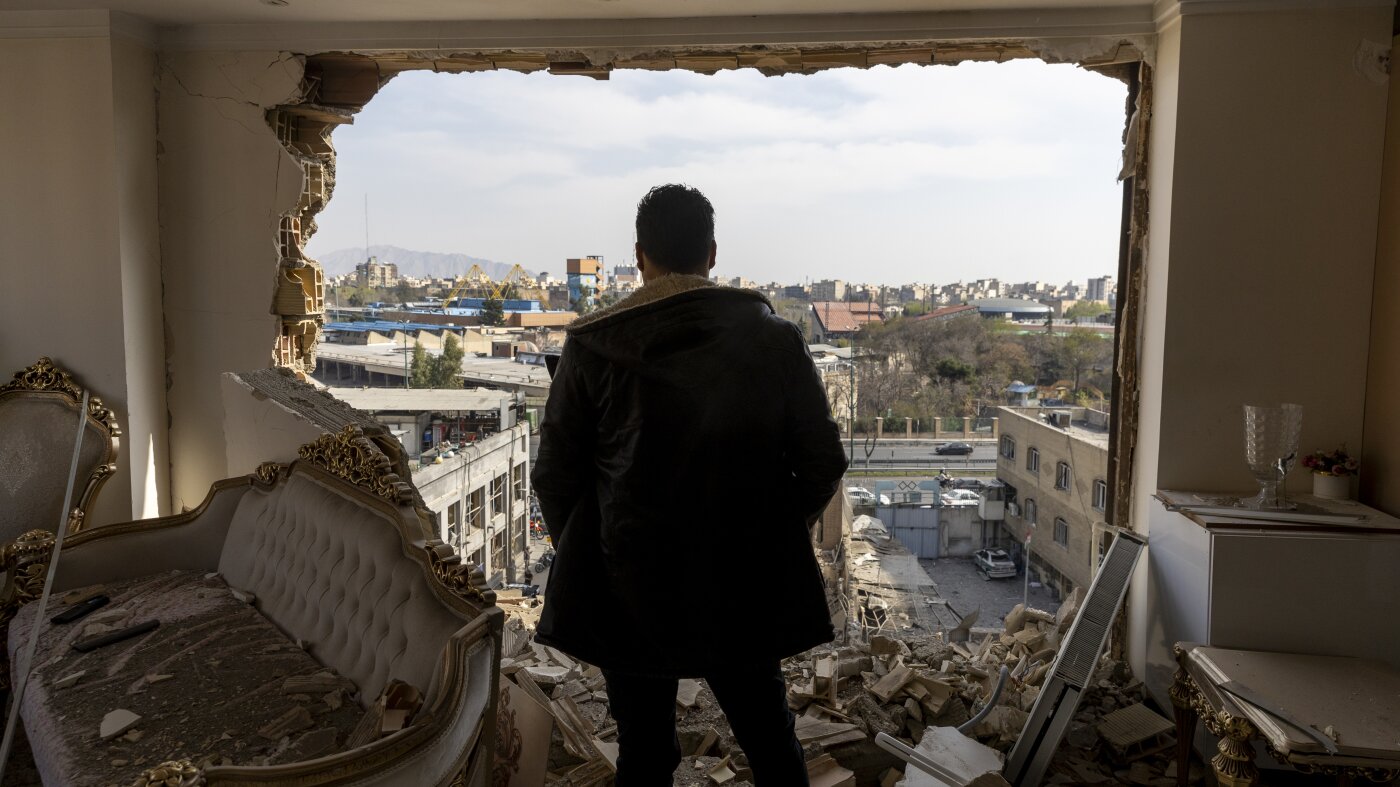
As the war in Iran between the U.S. and Israel continues, uncertainty looms about its future. President Trump was cautious when asked if he felt victorious, stating simply, “no, I don’t want to do that. There’s no reason to.” This highlights the complexities of the situation.
Karim Sadjadpour, a senior fellow at the Carnegie Endowment for International Peace, emphasizes that the conflict was initially seen as avoidable, rather than a response to an imminent threat. However, Iran has since closed the vital Strait of Hormuz, through which about 20% of the world’s oil passes. This has significantly altered the landscape of the conflict.
“What started as a ‘war of choice’ is evolving into a ‘war of necessity’ for the U.S.,” said Sadjadpour. He pointed out that many of Iran’s actions, including the attacks on Gulf countries, seem to have taken U.S. leaders by surprise. This shift in strategy illustrates how war can quickly become a deeper, more complex issue.
With Iran’s newly appointed supreme leader, Mojtaba Khamenei, the power dynamics within the Iranian government remain uncertain. The assassination of key figures like Ali Larijani has left a significant void, raising questions on the regime’s stability. Sadjadpour describes the inner workings of the Iranian government as a “black box,” inaccessible to outsiders.
The conflict has also garnered attention on social media, as people debate its implications. Many users express concern over the impact on global oil prices, especially since the Strait of Hormuz is critical for energy supplies. Surveys show a growing unease among the global public regarding military actions impacting daily life and economic stability.
According to recent studies, nearly 68% of Americans believe military intervention should focus on diplomatic solutions instead. This sentiment reflects a broader desire to avoid further escalation.
Sadjadpour stresses that any future negotiations with Iran must address multiple issues, including nuclear capacity and missile programs. “We are at a turning point,” he notes. “Our goals should clarify what we seek.” The confusion in U.S. policy has made it harder to build a coherent strategy.
While there is a low likelihood of a World War III scenario, Sadjadpour notes the worry that the current conflict sets a dangerous precedent for the region. “Stability in the Middle East appears increasingly fragile,” he stated. The disagreement between nations further complicates the geopolitical landscape, with Iran lacking reliable allies.
For the U.S., the best outcome may involve safely re-establishing trade routes and addressing Iran’s internal politics while checking its military ambitions. The complexity of the situation suggests that quick solutions are unlikely. As Sadjadpour puts it, “Modern-day Iran is a tragedy, both for its people and for international relations.”
