
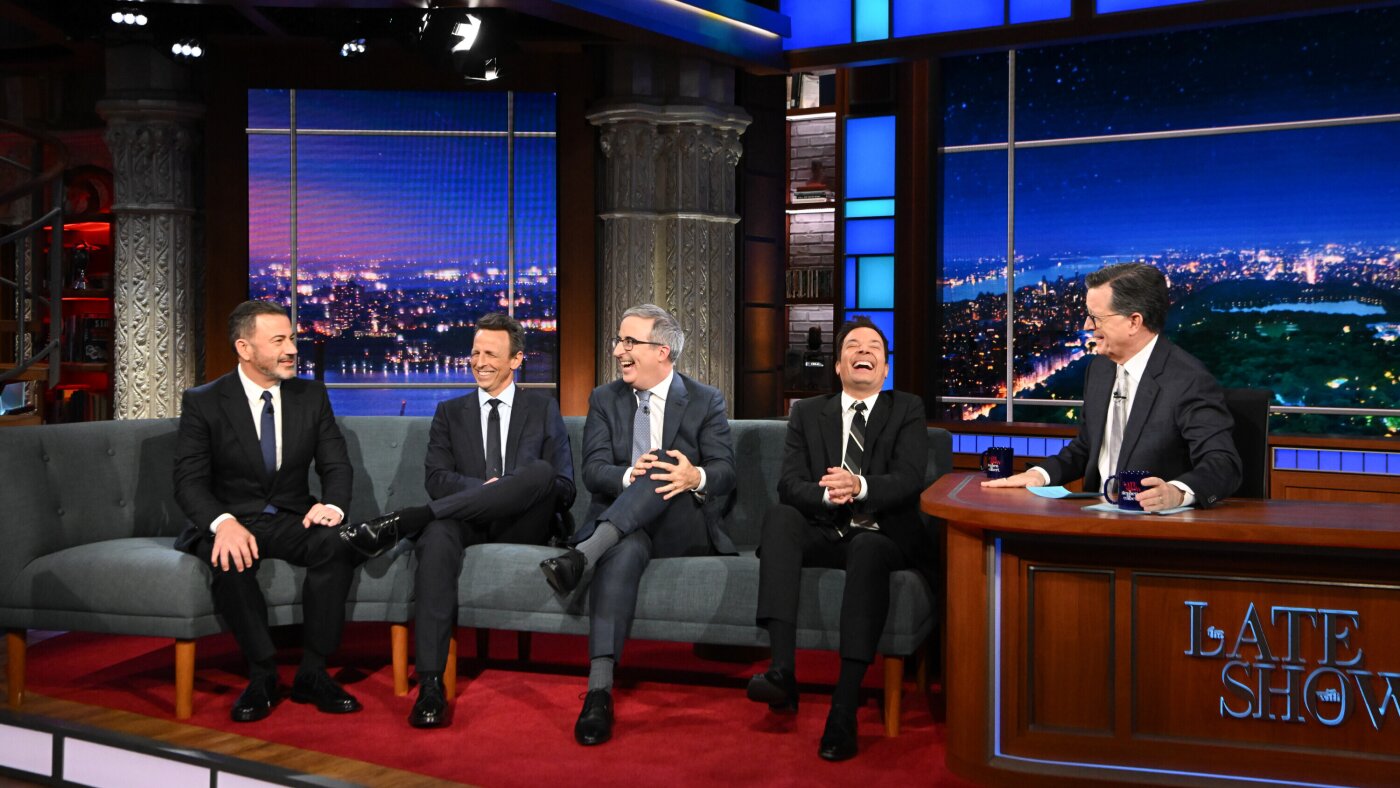
Stephen Colbert recently had a special reunion with his late-night friends, John Oliver, Seth Meyers, and the Jimmys—Kimmel and Fallon—on his final episodes of The Late Show. This gathering was a nod to their shared podcast, Strike Force Five, created during the Writers Guild of America strike a few years back.
Colbert’s last show is set for May 21, following CBS’s decision to cancel it, citing financial issues. However, many fans believe the cancellation was not just about money but also political, as Colbert often took jabs at former President Trump. In fact, during his last episode, he humorously critiqued Trump, which has been a hallmark of his show.
“Late night is in a weird spot right now,” Colbert remarked, highlighting the current state of late-night TV. He joked about the weight of their roles, saying, “We represent so much of late night.” This statement captures the pressures these hosts face in today’s polarized media climate.
In a recent study, around 63% of late-night viewers say political content influences their choice of show. As Kimmel pointed out during the reunion, viewers may have strong reactions to the hosts’ political commentary. He humorously noted that fans didn’t seem to cancel their Paramount Plus subscriptions in response to Colbert’s cancellation, unlike when he faced backlash over past comments.
The reunion had a friendly vibe, filled with playful ribbing and shared memories. It’s also a reminder of the bonds formed during their time in the industry. This isn’t just business; it’s personal for many of them.
Colbert’s group will reunite for an “emergency” podcast on May 13. This event symbolizes the resilience and camaraderie among late-night hosts, showing that even in challenging times, they can come together for laughs and support.
Recent comments on social media reflect fans’ mixed emotions regarding Colbert’s exit. Some express sadness and nostalgia, while others debate the implications for late-night programming in an evolving media landscape.
Overall, the late-night scene remains dynamic, and it will be interesting to see how these changes affect the genre moving forward.
