
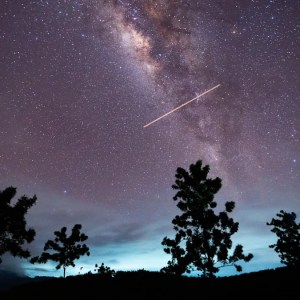
Stargazers, get ready for a cosmic show! The Eta Aquarids meteor shower peaks tonight into early Wednesday, just two weeks after the stunning Lyrid meteor display.
If you’re in the southern hemisphere, you can catch about 50 meteors every hour. For those north of the equator, expect around 10 to 30 meteors before dawn, according to the American Meteor Society. This will be the last major meteor shower until summer when the Alpha Capricornids and Southern Delta Aquariids appear.
What’s a Meteor Shower?
A meteor shower happens when Earth travels through debris trails left by comets or other celestial objects. The Eta Aquarids originate from comet 1P/Halley. This comet orbits the sun roughly every 76 years, last visible in our vicinity in 1986 and next expected in 2061.
During meteor showers, the number of visible meteors increases significantly. Normally, we see a few shooting stars on a clear night, but during a meteor shower, that number can soar.
What to Expect
The Eta Aquarids are known for being swift and leaving persistent trails across the sky. Observers in the southern tropics will enjoy the most spectacular views. “These meteors create a high percentage of lasting trails, but there are few fireballs,” the American Meteor Society shares.
Watching these meteors can be an enchanting experience. Imagine lying under a blanket of stars and witnessing bright streaks of light flash across the night sky.
How to Best View the Eta Aquarids
You don’t need any fancy equipment to observe the Eta Aquarids. They’ll be visible in both hemispheres early Wednesday morning. However, the southern hemisphere offers a clearer view as the meteors will be higher in the sky. Unfortunately, the nearly full moon will wash out some of the fainter meteors, dropping the visibility rate in the northern hemisphere.
For the best experience, find a spot away from city lights. NASA advises lying flat on your back with your feet toward the east. After about 30 minutes of gazing at the sky, your eyes will adjust, and you’ll likely catch more meteors.
Recent Observations and Insights
Research suggests that moments like this can spark excitement on social media. People often share their experiences and live reactions online, creating a sense of community among stargazers. A recent survey showed that over 60% of people who participated in meteor showers felt a stronger connection to nature.
So, as you prepare to witness this celestial event, remember that you’re part of a wider community, both on Earth and in the cosmos. Enjoy the show!
Source link
American Meteor Society, Eta Aquarids, meteor shower, southern hemisphere, NASA, Southern Delta Aquarids, northern hemisphere
