
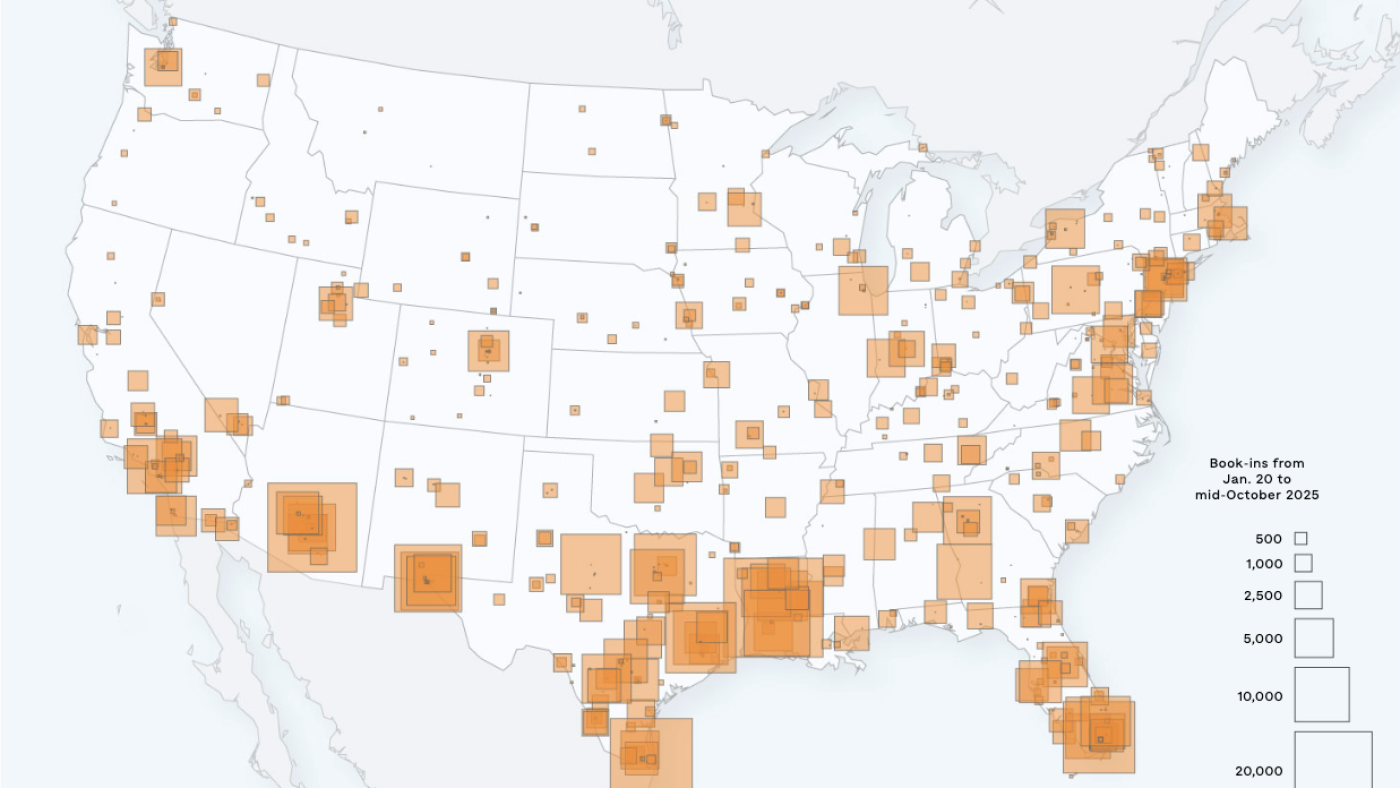
The expansion of Immigration and Customs Enforcement (ICE) detention facilities is causing significant backlash across the United States. With new funding pushing past $85 billion, nearly half of this will be directed towards rapidly increasing immigration detentions, which many view as an aggressive move to arrest and deport immigrants at unprecedented levels.
ICE has made a habit of leasing and acquiring various properties, from warehouses to local jails, to convert them into detention centers. Already, ICE operates over 220 detention sites nationwide, expanding its operations to include not only established facilities but also newly repurposed spaces. Detention facilities are now seeing, on average, about 70,000 detainees a day, a growth not witnessed since World War II.
Texas leads the way with over 200,000 detainee book-ins last year alone. This state, along with Florida, Louisiana, Arizona, and Georgia, accounts for more than 60% of ICE detentions. Concerns have arisen regarding the humane conditions in these facilities, with many state and local officials raising alarms about potential overcrowding and health risks. Recent incidents have shown an alarming rise in detainee deaths due to inadequate conditions, with 26 recorded deaths just since October.
The public response is significant. Polls indicate that 65% of Americans believe ICE has gone too far in its enforcement efforts—a notable increase in public concern. Local communities are also uniting against the expansion. In New Hampshire, a planned ICE facility faced severe community pushback that forced the state to halt its development. Similar resistance has been seen across states like Oklahoma and Mississippi, where proposed facilities have been scrapped due to local opposition. Even conservative figures, such as Mississippi Senator Roger Wicker, have voiced their disapproval of these projects, highlighting the risk of overwhelming local resources.
Grassroots movements are calling for transparency from ICE regarding its operations. Local leaders often report feeling blindsided by the sudden decisions made at the federal level. In places like Social Circle, Georgia, city officials have even restricted ICE’s water access until more clarity on their plans is provided. This growing discontent among locals reflects a nationwide desire for the government to be more transparent and accountable regarding immigration policies.
Furthermore, experts warn that such detention expansions could worsen ethical and health implications for detainees. Jennifer Ibañez Whitlock of the National Immigration Law Center encapsulated this sentiment, stating the combination of rapid expansion and reduced oversight raises significant health and safety concerns for detainees.
While some communities see potential economic boosts from new detention facilities, many residents struggle with the moral implications of profiting from such institutions. The conflicts between economic interest and ethical considerations pose tough questions for local governments and communities, creating a divide over the best path forward.
The public’s growing unease, combined with community actions, suggests a shift is happening in how immigration issues—not just enforcement but also human rights and community safety—are perceived in America. As these discussions unfold, they will likely play a crucial role in shaping future immigration policies in the coming years.
