
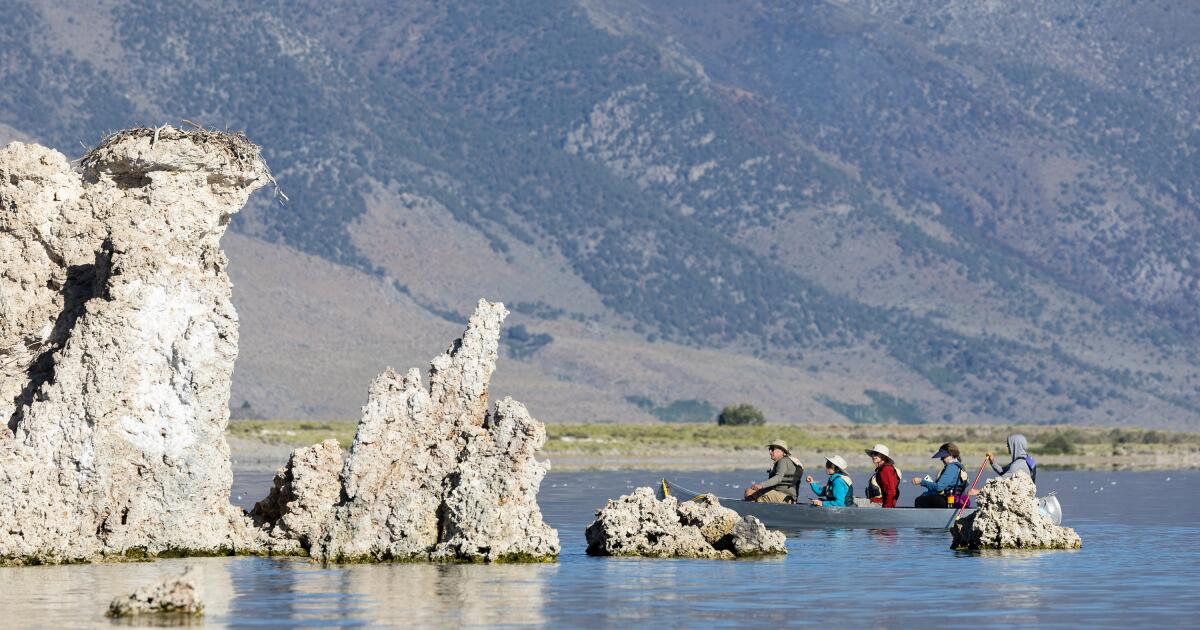
More than 30 years after a crucial ruling aimed to protect Mono Lake, California regulators are taking a fresh look at its water levels. Despite efforts to raise the lake, it remains significantly below the required target. Los Angeles uses water from creeks that feed the lake, which impacts its levels significantly.
A recent report by UCLA climate scientists shows that if L.A. stopped using water from these creeks, Mono Lake could be nearly 4 feet higher. “With current regulations, it’s unlikely we can meet lake level goals,” said expert Alex Hall from UCLA.
In 1994, state officials set a goal for Mono Lake to rise by 17 feet. Although it’s higher now than it was then, it’s still about 9 feet short of that level. The L.A. Department of Water and Power (DWP) has expressed skepticism about the UCLA study, questioning its methodology and conclusions. They argue that weather patterns, like precipitation and evaporation, play a more critical role in the lake’s levels.
Experts and environmentalists, however, are urging the state to enforce stricter water use policies. Richard Katz, a former board president of L.A.’s water authority, suggests that pausing water extraction from the Mono Basin could be the quickest way to help the lake recover. Environmental advocates emphasize the importance of Mono Lake as a habitat for migratory birds and a unique ecosystem.
At a recent state water board meeting, voices from various backgrounds echoed this concern. Members of the Bishop Paiute Tribe emphasized the urgent need for action, stating that the delays in addressing the lake’s plight undermine public trust in regulatory systems.
Geoffrey McQuilkin, leader of the Mono Lake Committee, warned that voluntary efforts by DWP have not been effective. “They won’t restore this national treasure on their own,” he said.
Concerns about Mono Lake are rising in the context of climate change. Recent studies show that many lakes in the West are declining, raising alarms about environmental impacts. As of now, the DWP’s top executive, Janisse Quiñones, argues that the city has made significant reductions in its water use from the Mono Basin. She believes halting further withdrawals would not have a meaningful impact on raising the lake’s levels.
In the end, the debate continues, with both sides presenting valid concerns about the future of Mono Lake and the broader implications for water management in California.
For more details on Mono Lake’s history and ongoing conservation efforts, you can check the California Water Board’s resources.
