
LONDON — Ireland’s government might face a big challenge. A no-confidence vote is on the table over how leaders handled recent fuel protests that caused major disruptions.
The situation started when protests erupted after the conflict between the U.S. and Israel against Iran. This led to the Strait of Hormuz being closed, affecting oil supplies worldwide. In response, Prime Minister Micheál Martin announced tax cuts to ease the crisis. However, many believe he acted too late, and opposition parties criticized the inadequate support provided.
Sinn Féin, the leading opposition party, is pushing for the vote. They are joined by other parties like the Social Democrats and Labour. Martin’s government, however, has arranged a vote of support to counteract the no-confidence motion.
If the no-confidence vote passes, the ruling government must resign. This could lead to Parliament seeking a new leader or triggering a general election. According to recent data, about 70% of voters are concerned about the rising fuel prices. Many feel the government isn’t doing enough to address their struggles.
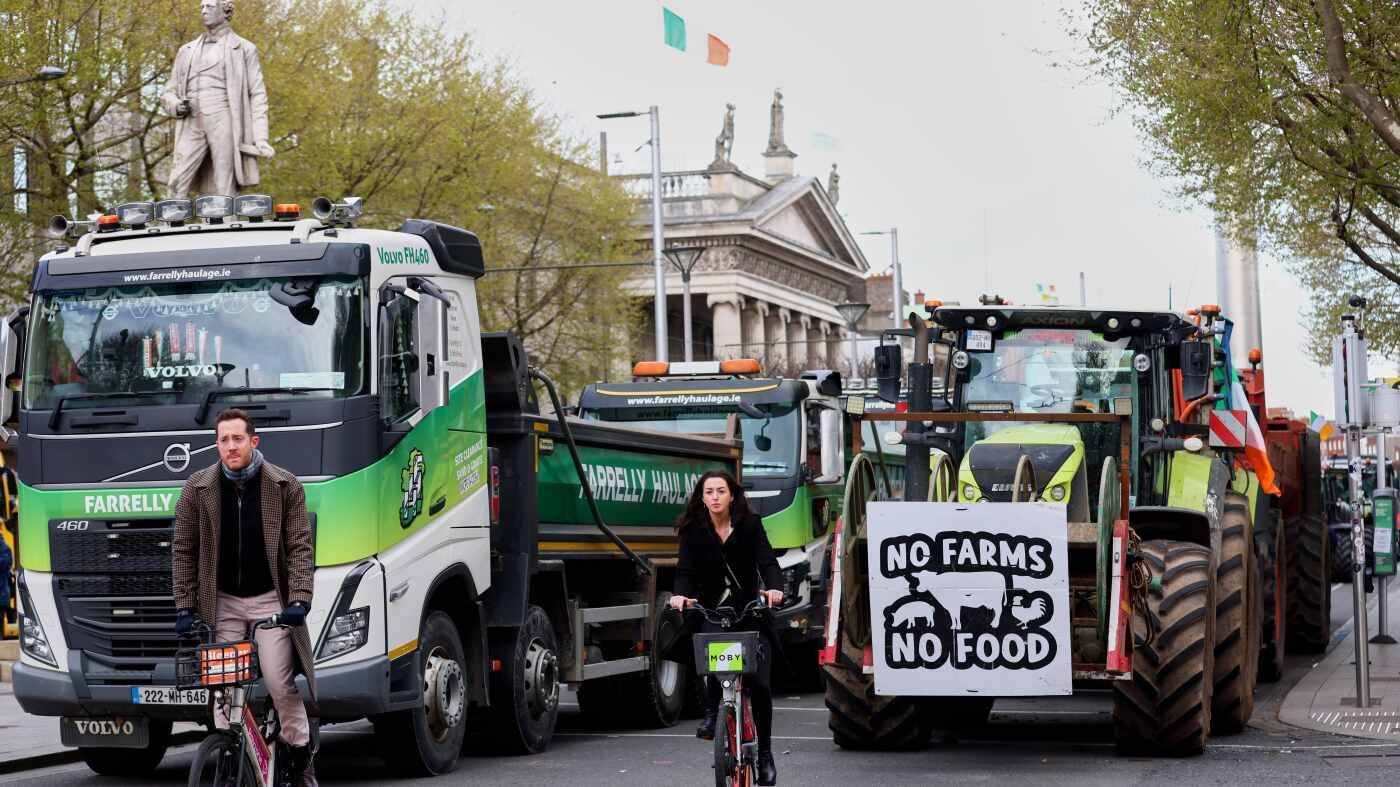
Protests began in early April, with slow-moving convoys blocking major roads. The power of social media helped spread the word quickly. Truckers, farmers, and drivers formed coalitions to showcase the urgent need for price controls or tax relief. Many protestors argue that the rising fuel costs are threatening their businesses.
Martin acknowledged the protests, saying the government could learn from them. He defended the police’s decision to clear blockades at critical infrastructure sites, like the Whitegate oil refinery. “If ports were blockaded for too long, it could have led to job losses,” he stated.
The demonstrations intensified over the weekend, leading to clashes where police used pepper spray. Still, many protesters felt their actions prompted some government commitment to change.
On the same day as the no-confidence vote, lawmakers will discuss a fuel support package worth approximately 505 million euros (about $595 million). This package aims to help drivers, farmers, and others affected by the costs, especially as many gas stations ran out of fuel due to the protests.
While the package includes direct payments and fuel subsidies, critics say it’s a late response to a growing crisis. The failure to address these issues has left many feeling frustrated and anxious about their financial futures. To learn more about the repercussions of these protests, check out this report.
