
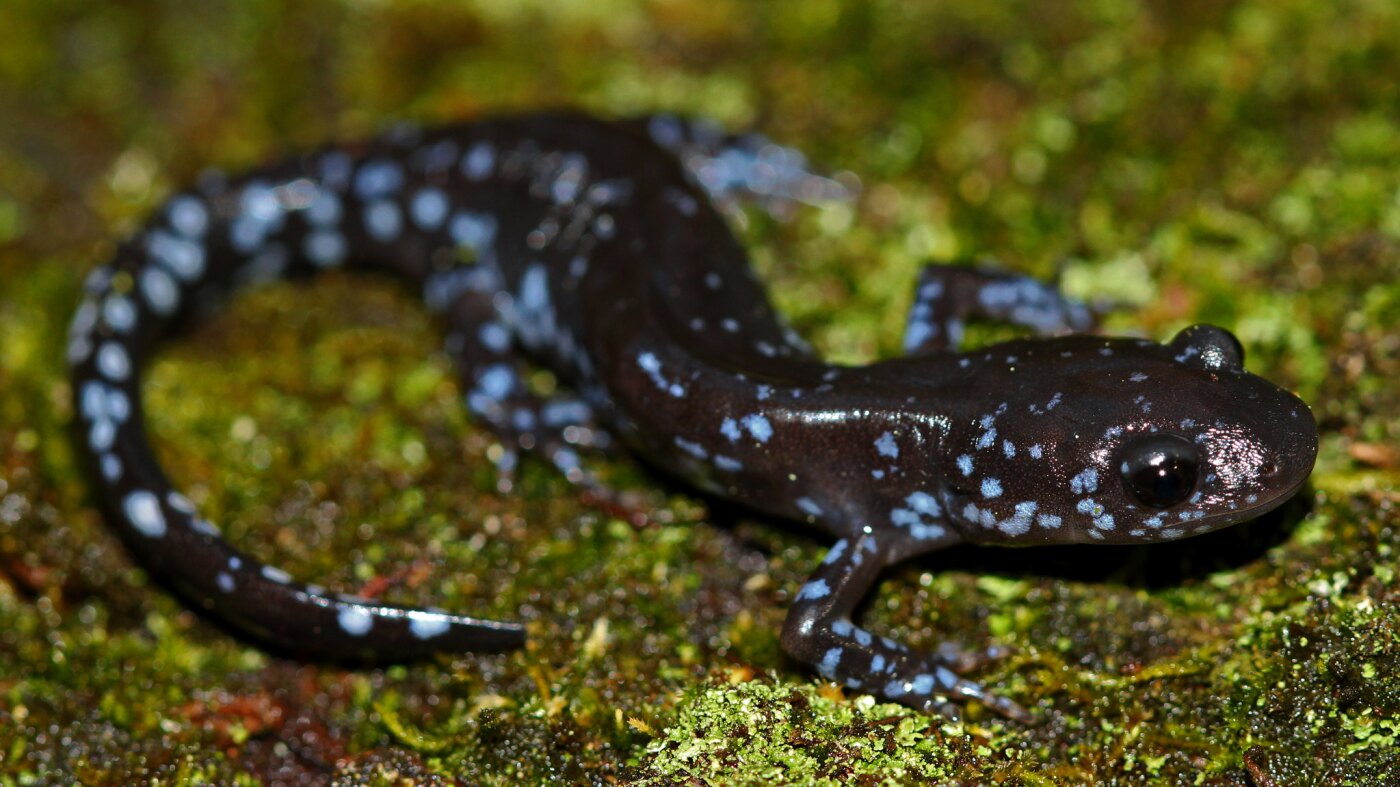
Blue-Spotted Salamanders: Survivors of the Cold
Did you know that blue-spotted salamanders can thrive even in freezing temperatures? These fascinating creatures have a unique ability to remain active while others might be frozen solid. Recent observations in Algonquin Provincial Park, Canada, showed researchers that these salamanders are not just resilient – they can move and function at body temperatures below freezing.
A Unique Survival Strategy
Researchers like Danilo Giacometti from the University of São Paulo noticed salamanders venturing out when the ground was still covered in ice. “It’s remarkable to see them moving in such cold weather,” he shared. These salamanders, known for their striking black bodies adorned with bright blue spots, typically spend winter hidden underground. When spring arrives, they emerge to breed in nearby ponds.
Their behavior was unexpected. Scientists once thought that such activity only occurred when temperatures nudged above freezing. However, using thermal cameras, they discovered some salamanders had temperatures as low as 25°F while moving about without struggle. “If they were frozen, they wouldn’t be capable of movement,” noted biologist Glenn Tattersall.
The Science Behind Their Resistance
So, what allows these amphibians to thrive in extreme conditions? Researchers suggest they produce a natural antifreeze that keeps their bodily fluids from solidifying, known as “supercooling.” This survival mechanism is crucial for beginning their breeding cycle as early as possible in the spring while many predators are still dormant.
Other cold-blooded animals have similar adaptations. For instance, the Alaskan wood frog can freeze solid with a stopped heart for months, while Siberian salamanders tolerate temperatures as low as -40°F. Notably, not much is known about how many amphibians survive winter, making studies like these vital.
Connecting Past to Present
Historically, cultures have been fascinated by salamanders, seeing them as mystical creatures that could survive fire. Today, we understand they are not only capable of withstanding extreme cold but also play a key role in their ecosystems. As climate change affects environments, studying these salamanders can offer insights into how species adapt to shifting climates.
Conclusion
Blue-spotted salamanders are not just survivors; they redefine resilience in the animal kingdom. Understanding how they thrive in harsh conditions can help us appreciate the complexities of nature and the incredible adaptability of life. More research in this area could uncover even more about the secrets these unique amphibians hold.
For a deeper dive into their findings, check out the research published in the Canadian Journal of Zoology here.
